Everything the Smartphone Ate: A Farewell Tour of Objects We Left Behind
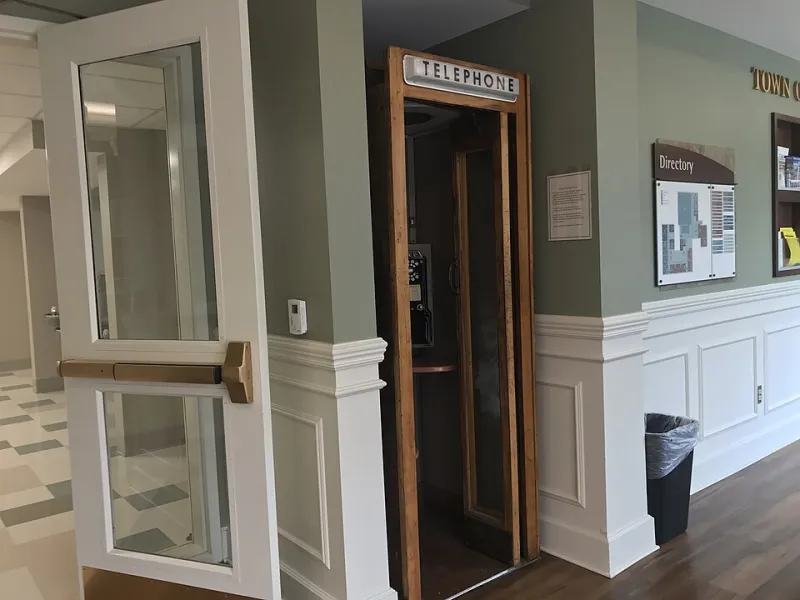
Photo: Nathan Dimartino, CC BY-SA 4.0, via Wikimedia Commons
It's easy to forget that the smartphone didn't just add things to our lives — it took an enormous number of things away. Not violently, not overnight, but steadily, like a tide. Objects we carried for a century simply stopped being necessary, and within about fifteen years they were gone. Here's a farewell tour of the things your phone quietly ate.
1. The Phone Booth
Before: Finding a phone booth in 1985 was a civic assumption — Superman needed somewhere to change, after all. You kept a dime or quarter in your pocket for emergencies, and calling home from the road meant feeding coins into a slot while wind and traffic noise competed with the conversation.
After: Superman has a serious problem. America's last phone booths were pulled out decades ago, and payphones in general have nearly vanished. Your pocket now carries a device that made the entire concept of "finding a phone" obsolete — you were always reachable, whether you wanted to be or not.
2. The Paper Map
Before: Every glovebox had a folded state map, creased into origami-like patterns that could never be refolded correctly. Long road trips required a navigator in the passenger seat calling out exits, and getting lost was a genuine, sometimes hours-long experience.
After: Losing your way now requires actively ignoring a calm voice offering to recalculate. The navigator role — a real family job on road trips — has been automated out of existence, along with the small triumphs of actually reading a map.
3. The Travel Agent
Before: Booking a flight meant visiting or calling an agency, where a professional with a CRS terminal searched fares, printed paper tickets, and knew which hotels wouldn't ruin your honeymoon. Travel agents held the keys to the whole system.
After: The keys moved to your thumb. Comparison shopping across dozens of airlines takes minutes, and the travel agent profession has shrunk to specialists handling complex trips. Convenient, yes — but we also lost the person who'd warn you that the cheap hotel was next to the highway.
4. The Film Roll
Before: Photography was rationed. A 24-exposure roll of film had to last the whole vacation, so you chose your shots carefully, finished the roll, dropped it at the drugstore or Fotomat hut, and waited days to learn whether anyone's eyes were open.
After: We take roughly 1.4 trillion photos a year worldwide, view them instantly, and delete most without ceremony. Photography went from a scarce, deliberate act to an ambient one — and the ritual of opening a fresh envelope of prints is gone for good.
5. The Alarm Clock
Before: Every nightstand had a dedicated device whose sole purpose was making noise at 6:30 a.m. — the wind-up twin bells, then the digital flip-clock with glowing red digits. Wind it, set it, trust it.
After: The alarm clock was absorbed into the phone, along with the flashlight, the radio, the stopwatch, the calculator, and the nightstand itself, which increasingly just holds the phone that does everything.
6. The Phone Book
Before: The Yellow Pages arrived annually, thick as a brick, and doubling as a booster seat for children at dinner. Finding a plumber meant alphabetically hunting through a thousand listings with no reviews and no way to know who'd show up.
After: Search, reviews, maps, and one-tap calling replaced the entire directory industry. The phone book didn't shrink — it evaporated, and most people under 30 have never held one.
What the Tide Left Behind
Some of these losses are pure upgrades. Nobody mourns being stranded without a quarter, and few miss unfolding a map on the shoulder of a two-lane road at dusk. But it's worth noticing how much context lived inside those obsolete objects: the travel agent's advice, the film roll's built-in restraint, the map's lesson in actually knowing where you are.
The smartphone didn't just replace tools. It replaced the habits, rituals, and small human interactions that came attached to them. We gained a device that does everything — and lost, almost without noticing, a hundred small things that each did one thing well.