The Cashier Who Knew Your Coffee Order: America's Vanishing Retail Relationships

Photo by Photo by Fabio Sasso on Unsplash on Unsplash
The hardware store on Elm Street knew exactly what kind of paint your grandfather used on his back porch. Not because it was in a database. Because Earl, who'd been behind the counter since 1954, remembered.
That's not nostalgia talking. That was simply how retail worked in America for most of the twentieth century — as a network of ongoing human relationships rather than a series of isolated transactions. And somewhere between the rise of big-box stores and the invention of one-click ordering, that network quietly dissolved.
When Shopping Was a Social Act
For the better part of American commercial history, buying things meant dealing with people who had a genuine stake in your satisfaction. The local grocer extended informal credit to families he trusted. The pharmacist remembered which medications your kids had reactions to. The tailor knew your measurements without asking. The butcher set aside the good cuts for regulars before they hit the display case.
This wasn't just warm and fuzzy — it was functional. Personal relationships substituted for the systems we now take for granted. No loyalty app required when the shopkeeper already knew you preferred the darker roast. No online review needed when your neighbor's word about the new dry cleaner was worth more than any star rating.
Main Street retail in mid-century America operated on reputation and familiarity. Merchants needed repeat customers, and repeat customers needed merchants they could trust. The relationship was genuinely mutual.
Credit, in particular, was deeply personal. Before credit scores existed in their modern form, a shopkeeper might extend a tab to a customer based on nothing more formal than knowing the family for fifteen years. Character — observable, community-verified character — was the underwriting model.
The Efficiency Revolution That Changed Everything
The transformation arrived in waves.
First came the supermarkets of the postwar era, which replaced the personal grocer with scale and selection. The tradeoff was explicit and largely welcomed: you got lower prices and more variety, and in exchange you dealt with staff who didn't know you and didn't need to. The transaction became more anonymous, but the savings were real.
Then came the big-box era of the 1980s and 90s. Walmart, Kmart, Home Depot — stores so large that the idea of a clerk knowing your name was structurally impossible. Retail staff became interchangeable, turnover climbed, and the notion of a long-term relationship with the person selling you things started to seem almost quaint.
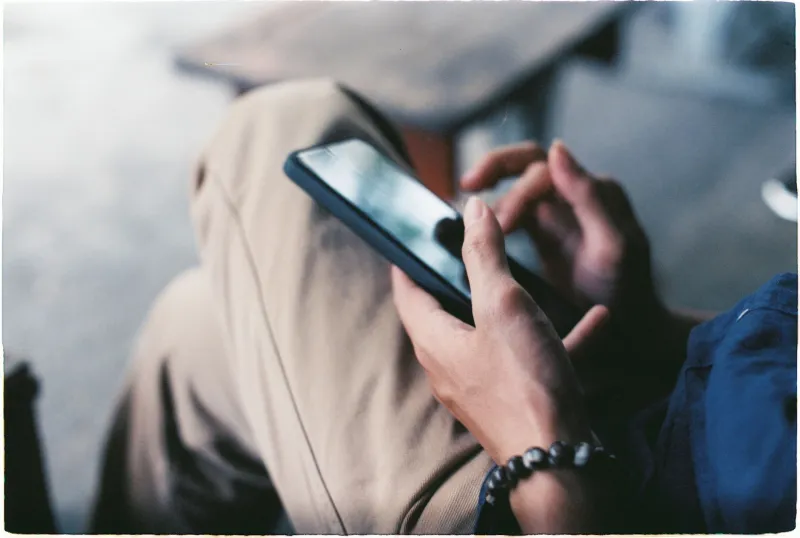
The internet finished the job. By the early 2000s, Americans could purchase almost anything without speaking to another human being at any point in the process. Amazon didn't just change where people shopped — it changed what shopping was. A behavior that had always involved social exchange became a solitary, screen-based activity optimized for speed.
Today, self-checkout kiosks handle a growing share of in-store transactions. Grocery delivery means some Americans never set foot in a store at all. And the "relationship" between customer and retailer now lives entirely inside an algorithm that tracks your clicks and serves you recommendations based on behavioral data you didn't knowingly provide.
What the Numbers Reveal
The retail workforce transformation is striking on its own terms. In 1960, roughly one in five American workers was employed in retail trade — a sector defined by direct customer interaction. Today, that proportion has declined, and the jobs that remain look very different. The knowledgeable specialist — the hardware clerk who could diagnose your plumbing problem, the bookstore owner who could recommend your next read — has been largely replaced by generalist staff in high-turnover environments, or eliminated entirely by automation.
Independent retail has been hollowing out for decades. The number of small, owner-operated retail businesses in the US fell by roughly 40 percent between 1990 and 2020, according to Census Bureau data. Each closure represented not just a lost business but a lost relationship — a node in the community's social fabric that simply disappeared.
The Hidden Costs of Frictionless Commerce
Convenience has real value. Nobody serious is arguing that Americans should give up online shopping to recreate the 1955 hardware store experience. Prices are lower. Selection is incomparably wider. The ability to buy anything from anywhere at any hour is a genuine quality-of-life improvement for millions of people.
But there are costs that don't show up in the transaction price.
Research on social connection consistently finds that brief, repeated interactions with familiar people — what sociologists call "weak ties" — contribute meaningfully to wellbeing. The cashier you see every Thursday morning. The pharmacy tech who notices you look tired. These aren't deep relationships, but they're real ones, and they provide a kind of low-level social texture that makes daily life feel less isolated.
As those interactions disappear into self-checkout screens and delivery apps, something subtle gets removed from the fabric of everyday life. Americans are reporting record levels of loneliness. The causes are complex and multiple, but the erosion of routine human contact — including the commercial kind — is part of the picture.
There's also the question of expertise. The knowledgeable local merchant was a genuine resource. The person who'd run the same camera shop for twenty years could tell you things no product description could. That kind of embedded, relationship-based knowledge is genuinely harder to find now, scattered across Reddit threads and YouTube tutorials rather than concentrated in a person who knew your needs.
The Relationship We Replaced With a Rating
We didn't abandon personal retail relationships because we stopped valuing them. We traded them for something that seemed, in the moment, like a straightforward upgrade: cheaper, faster, more convenient. And by narrow measures, it was.
But the cashier who remembered your coffee order wasn't just an inefficiency waiting to be automated away. She was a small, daily reminder that commerce used to be something you did with people rather than to a system. That distinction mattered more than we realized — and we're only beginning to count what it cost to let it go.