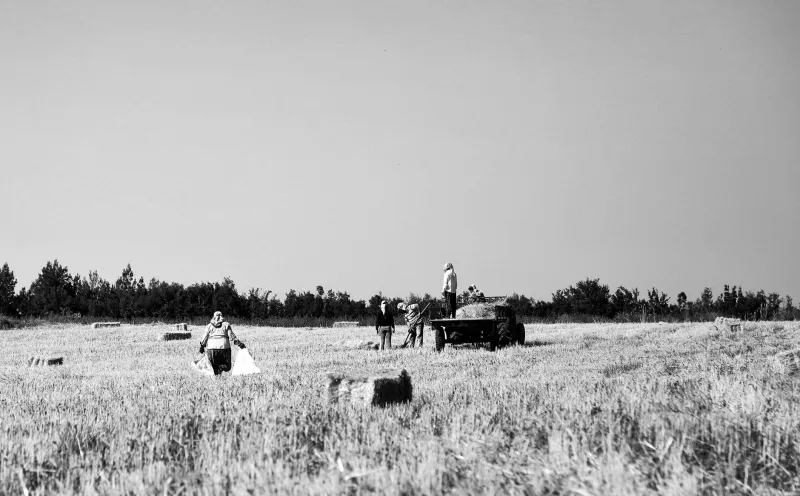
The Diseases That Vanished: How America Quietly Won Some of Its Biggest Medical Battles
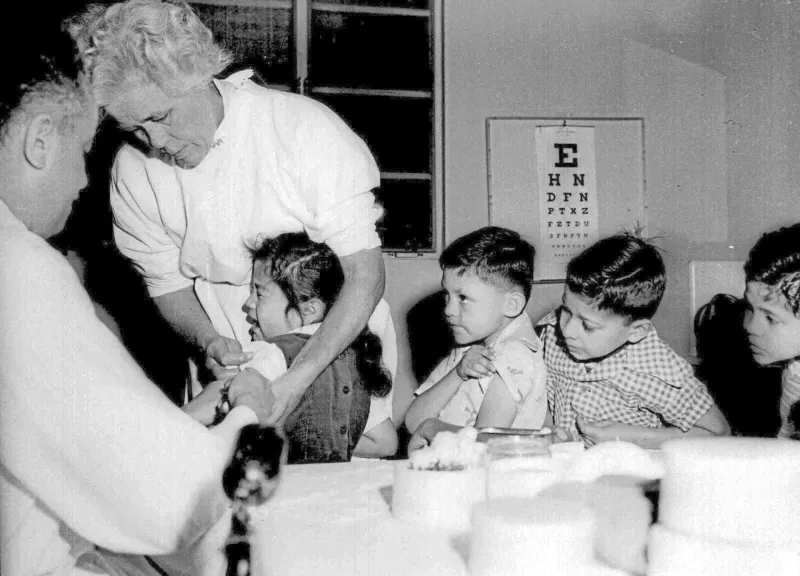
Photo: vintage 1950s polio vaccination children public health American hospital, via www.news10.com
There's a particular kind of progress that's almost impossible to see because its greatest achievement is an absence. No news alert announces that zero children were paralyzed by polio this year. No headline celebrates the fact that smallpox, a disease that killed more humans throughout history than any war, no longer exists as a natural threat anywhere on Earth.
We tend to notice what goes wrong. We almost never stop to appreciate what has quietly, permanently gone away. And in the history of American public health, quite a lot has gone away.
Smallpox: The Disease That Defined Human Suffering
If you want to understand what smallpox actually meant to Americans living before its eradication, start with this: for most of recorded history, it was the single most feared disease on Earth. Highly contagious, visually horrifying, and lethal in roughly 30 percent of cases, smallpox killed an estimated 300 million people in the twentieth century alone — more than all of that century's wars combined.
In colonial America, smallpox epidemics were recurring catastrophes. Entire Native American populations were decimated by it. Urban outbreaks in the 1700s and 1800s could kill hundreds of people within weeks. Survivors were frequently left blind, or permanently scarred by the pockmarks that gave the disease its name.
The United States conducted a mass vaccination campaign through the twentieth century, and by 1972 had stopped routine smallpox vaccination because domestic transmission had been eliminated. In 1980, the World Health Organization declared smallpox eradicated globally — the only human infectious disease to have been completely wiped off the planet.
Most Americans alive today have never been vaccinated against smallpox. They've never needed to be. That is an almost incomprehensible medical achievement, delivered so thoroughly that it has become invisible.
Polio: The Summer Terror
For American parents in the first half of the twentieth century, summer was not simply a season of vacations and backyard barbecues. It was polio season — and it was terrifying.
Poliomyelitis, caused by a virus that attacks the nervous system, swept through American communities in annual epidemics that peaked in the 1940s and early 1950s. In 1952 alone, the United States recorded nearly 58,000 cases — the worst outbreak in the country's history. Of those, more than 3,000 died and thousands more were permanently paralyzed.
Public swimming pools were closed. Movie theaters shut down. Parents kept children indoors during the peak summer months, terrified that a trip to the neighborhood pool could end in an iron lung — the barrel-shaped respirator that kept paralyzed patients alive by mechanically forcing their lungs to breathe. At one point, a single hospital in Los Angeles housed more than 70 patients in iron lungs simultaneously.
 Photo: Los Angeles, via cdn.britannica.com
Then, in 1955, Jonas Salk announced his polio vaccine. The reaction was described by contemporaries as something close to national euphoria. Schools held celebrations. Church bells rang. People wept in the streets. Within a few years, polio cases in the US had collapsed by more than 95 percent. By 1979, wild poliovirus transmission in the United States had been eliminated entirely.
 Photo: Jonas Salk, via s.hdnux.com
The iron lungs were quietly retired. The summer terror faded from living memory. Today, most American pediatricians have never seen a polio case.
Scarlet Fever: The Disease That Haunted Childhood
If you've read Little Women or any number of nineteenth-century American novels, you've encountered scarlet fever as a recurring specter of childhood. That literary presence wasn't dramatic license — it was accurate reporting.
 Photo: Little Women, via static1.srcdn.com
Caused by a strain of streptococcal bacteria, scarlet fever was one of the leading killers of American children through the early twentieth century. The disease announced itself with a bright red rash, high fever, and a distinctive "strawberry tongue." In severe cases, it progressed to rheumatic fever, which could permanently damage the heart, or to kidney failure. Annual death tolls in the thousands were common in the late 1800s.
The disease didn't vanish through vaccination. It was largely defeated by the development and widespread use of penicillin in the 1940s, which made bacterial infections that had previously been death sentences into conditions treatable in a single course of antibiotics. Scarlet fever still exists today — it never fully disappeared — but with antibiotic treatment, it is now a manageable illness rather than a potential death sentence. Cases that once might have killed a child within a week are now resolved with a ten-day prescription.
Measles: A Near-Miss We Should Pay More Attention To
Before a vaccine was introduced in 1963, measles infected an estimated 3 to 4 million Americans every year. Of those, roughly 48,000 required hospitalization, 1,000 developed chronic brain damage, and 400 to 500 died — almost all of them children. It was so common that most Americans simply accepted it as an inevitable part of childhood, much the way they accepted chickenpox.
By 2000, measles had been declared eliminated from the United States, meaning there was no longer continuous domestic transmission of the virus. Cases that appeared were traced to international travelers, not local spread.
It's worth pausing on that. A disease that once infected millions of American children every single year had been reduced to a footnote, appearing only when the virus arrived from abroad. That's not a minor improvement. That's a fundamental reordering of what childhood illness in America looks like.
The Quiet Victory We Forgot to Celebrate
There's a concept in psychology called "baseline neglect" — the human tendency to forget what things used to be like once a new normal sets in. We calibrate our sense of how things are based on our immediate experience, not historical comparison.
For Americans under 50, a world without smallpox, without annual polio epidemics, without scarlet fever decimating neighborhoods, is simply the world as it has always been. The fear those diseases once generated — the parents who kept children home from public pools, the communities that shuttered schools, the families who watched children disappear into iron lungs — belongs to history, not lived experience.
That's exactly as it should be. But it's worth occasionally looking back at what was there before the vaccines, before the antibiotics, before the public health infrastructure that quietly maintains the absence of these diseases every single year.
The victories are real. They are enormous. And they are ongoing — which means they are also fragile, dependent on the continued will to maintain vaccination rates, fund public health systems, and remember what the alternative actually looked like.
We have come an almost unimaginable distance. The least we can do is notice.