The Day America Stopped Knowing Where Its Food Came From
Somewhere in a grocery store right now, someone is picking up a bag of apples with absolutely no idea where those apples grew, who picked them, or how long ago they were harvested. That's not a criticism — it's just Tuesday in 21st-century America.
But it would have been genuinely incomprehensible to an American living a hundred years ago.
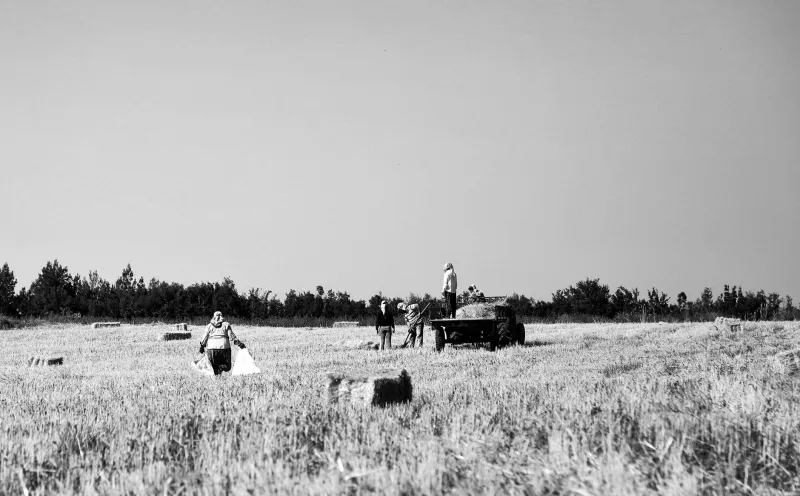
In 1900, roughly 41% of the American workforce was employed in agriculture. Nearly half the country didn't just know where their food came from — they grew it themselves. They planted it in spring, tended it through summer, harvested it in fall, and preserved enough to survive the winter. Food wasn't a consumer product. It was the central project of daily life.
How America went from that world to this one is a story about technology, economics, and a series of crises that permanently reshaped the relationship between Americans and what they eat.
Life on the Family Farm
At the turn of the 20th century, the family farm wasn't a romantic ideal — it was a grinding, relentless reality. Families worked from before sunrise to after sunset. Children were part of the labor force almost as soon as they could walk. There were no weekends in the agricultural sense; animals needed feeding and crops needed tending regardless of what day it was.
But within that hard life was something that's almost impossible to replicate today: a complete, intimate understanding of where food comes from. Farm families knew their soil. They knew which fields drained well and which flooded in a wet spring. They saved seeds from year to year, built relationships with neighboring farms for trading and mutual aid, and ate according to what was actually growing — which meant eating seasonally, locally, and with very little waste.
Food wasn't abundant. A late frost could wipe out a season's work. A drought could mean genuine hunger. But it was known. Every meal had a story, and the family at the table had usually lived that story firsthand.
The Machines That Changed Everything
The first major disruption was mechanical. The invention and mass adoption of farm machinery — steel plows, mechanical reapers, and eventually the gasoline-powered tractor — dramatically increased what a single farmer could produce. Work that had once required dozens of hands could now be done by one person and a machine.
This was, in many ways, a genuine miracle of progress. It freed millions of Americans from back-breaking manual labor and made food cheaper and more plentiful. But it also made smaller farms economically unviable. If your neighbor could plant five times as many acres with the same effort, and you couldn't afford the machinery to match him, the math eventually stopped working in your favor.
The Great Depression accelerated the collapse. Falling crop prices, catastrophic debt, and the ecological disaster of the Dust Bowl drove hundreds of thousands of farm families off the land in the 1930s. John Steinbeck immortalized part of that exodus in The Grapes of Wrath — the Joad family heading west from Oklahoma, their farm gone, their world dismantled. They were not fictional. Millions of real families lived that story.
 Photo: John Steinbeck, via c8.alamy.com
The Corporate Takeover
After World War II, the transformation went into overdrive. Federal agricultural policy — through price supports, subsidies, and programs that favored large-scale production — consistently advantaged big operations over small ones. The famous advice from President Nixon's agriculture secretary Earl Butz summed up the era's philosophy bluntly: "Get big or get out."
 Photo: Earl Butz, via i.ytimg.com
Farms got big. And small farmers got out.
By the 1970s and 80s, corporate agribusiness had fundamentally reorganized American food production. Massive monoculture operations — single farms growing thousands of acres of corn, soybeans, or wheat — replaced the mixed, diversified family farms that had once defined rural America. Vertical integration meant that the same corporations that grew the grain also processed it, packaged it, and sold it to retailers.
The family farm didn't disappear entirely, but it became a marginal player in a system designed around industrial scale. Today, the top 10% of American farms by size account for roughly 70% of all agricultural output. The average American farm is larger than ever, but there are far fewer of them, and fewer families living on them.
What 2% Looks Like
Less than 2% of Americans now work in farming. That number is almost abstract until you think about what it actually means: the other 98% of us have essentially no direct involvement in producing our own food. We are entirely dependent on a long, complex, largely invisible supply chain that stretches from industrial farms to processing facilities to distribution centers to supermarket shelves.
Most American children have never seen a crop field up close. Many adults couldn't identify a soybean plant or explain how corn is harvested. The knowledge that was once fundamental to survival — how to grow food, preserve it, store it through winter — has become niche expertise, the province of homesteaders and hobby gardeners.
There's a real health dimension to this disconnect. When you have no relationship with how food is grown, it's easier to accept food that's been heavily processed, chemically treated, or optimized for shelf life rather than nutrition. The rise of ultra-processed food in the American diet tracks almost perfectly with the decline of the family farm.
The Quiet Revival
Something interesting has been happening in the margins, though. Farmers markets have more than tripled in number since the 1990s. Community-supported agriculture programs — where families pay a local farm directly for a weekly share of the harvest — have grown steadily. Urban farming initiatives are taking root in cities from Detroit to Denver.
These aren't going to reverse a century of industrial transformation. But they suggest that the desire to know where food comes from hasn't disappeared — it's just been buried under decades of convenience.
The family farm that once fed half of America is largely gone. What replaces it, and whether Americans ever rebuild a meaningful connection to their food supply, is still being written.