When Knowing Something Required Knowing Someone: The Collapse of America's Information Gatekeepers
Imagine you're in 1974. You've just been handed a legal dispute with your landlord and you have no idea what your rights are. What do you do?
If you're lucky, you know a lawyer — or know someone who knows a lawyer — who might spend twenty minutes on the phone walking you through the basics. If you're not lucky, you drive to the public library, explain your situation to a reference librarian (who may or may not know much about tenant law), and then spend several hours flipping through legal reference books written for attorneys, not renters. Either way, you probably leave with incomplete information and the nagging sense that the real answer lives somewhere you don't have access to.
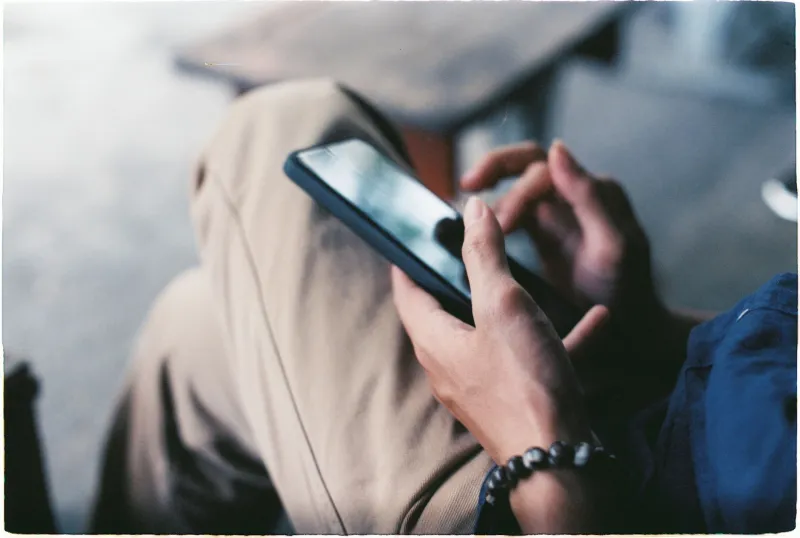
Now you're in 2025. You type the question into your phone while standing in your kitchen. You have a detailed, reasonably accurate answer in about forty-five seconds.
That shift — from information as a scarce, socially distributed resource to information as an abundant, instantly accessible utility — is one of the most profound changes in American daily life. And we've barely stopped to think about what it actually means.
The Gatekeepers Were Everywhere
For most of the twentieth century, specialized knowledge was held by specialists. That sounds obvious, but the practical implications were enormous. It meant that your ability to make informed decisions about your health, your finances, your legal situation, your home repairs, your children's education — virtually every major domain of life — depended heavily on your access to credentialed intermediaries.
Doctors didn't just treat you; they decided what you needed to know about your own condition. Financial advisors didn't just give advice; they controlled the information that made the advice meaningful. Lawyers, accountants, real estate agents, insurance brokers — each profession operated as a toll booth between ordinary Americans and the knowledge required to navigate their own lives.
This wasn't always cynical. Many of these gatekeepers were genuinely helpful and took their roles seriously. But the structure created real inequalities. If you had a family doctor you trusted and a lawyer you could call, you were navigating life with a very different map than someone who had neither. Access to expertise tracked closely with income, education, and social capital. It always had.
The encyclopedia salesman, now a figure of almost comic nostalgia, was a genuine fixture of mid-century American life for a reason. Owning a set of encyclopedias was a meaningful act — a family's attempt to keep some portion of human knowledge within reach without having to ask someone else every time a question came up. That those books were immediately outdated the moment they were printed was a problem nobody had a good solution to.
Then the Walls Came Down
The internet didn't just speed up information delivery. It structurally dismantled the system that made information scarce in the first place.
In the late 1990s, the shift started slowly — mostly enthusiasts and early adopters using dial-up connections to access rudimentary websites. But by the mid-2000s, something fundamental had changed. WebMD was letting patients research their symptoms before appointments. Legal self-help sites were walking ordinary people through court filings. Financial forums were teaching retail investors concepts that had previously lived exclusively inside brokerage firms.
By the time the smartphone became universal — roughly 2010 to 2015 — the transformation was essentially complete. The sum of human recorded knowledge became available to virtually every American adult, in their pocket, at all times, for free. YouTube tutorials replaced trade school courses for millions of people learning to fix their own cars, renovate their own bathrooms, or build their own small businesses. Reddit communities became de facto support networks for rare medical conditions, staffed by patients with more lived experience than many physicians.
The reference librarian didn't disappear — but her role changed completely. The encyclopedia salesman did disappear, almost overnight.
The Liberation Is Real
It's worth sitting with how genuinely extraordinary this is before getting to the complications.
A first-generation college student in rural Alabama can now access MIT OpenCourseWare for free. A Spanish-speaking immigrant in Texas can research their employment rights without needing to find a bilingual attorney willing to take a pro bono case. A parent whose child has just been diagnosed with a rare disease can find, within hours, a community of other parents navigating the same diagnosis — people with years of accumulated practical knowledge that no single specialist could match.
The democratization of information has been, in meaningful ways, a democratization of power. The knowledge asymmetry that once made ordinary people dependent on professionals for even basic life decisions has been substantially reduced. That's not a small thing. That's a genuine expansion of human agency.
The Chaos Is Also Real
But here's where it gets complicated. When information was scarce and gatekept, the gatekeepers — whatever their flaws — also performed a filtering function. Bad information didn't travel as fast or as far. The doctor who gave you questionable advice reached one patient. The wellness influencer with 4 million followers pushing dangerous supplement protocols reaches a very different number.
The collapse of credentialed authority as information gatekeeper hasn't been replaced by better collective judgment. It's been replaced by engagement algorithms that reward confidence, novelty, and emotional resonance over accuracy. Americans now have access to more information than any previous generation and are arguably more confused about fundamental questions — about vaccines, about nutrition, about basic economics — than they were when they had less data and fewer sources.
There's also something quieter that's been lost: the relationship that often accompanied the exchange of expertise. The family doctor who knew your history. The accountant who understood your particular situation. The librarian who learned what you were working on and pointed you toward something you hadn't thought to look for. Information delivered through a search bar is accurate or inaccurate, useful or not — but it isn't relational. It doesn't know you.
A New Kind of Literacy
What the internet era actually demands isn't just access to information. It demands a new kind of literacy — the ability to evaluate sources, recognize manipulation, sit with uncertainty, and know when a YouTube video genuinely isn't a substitute for a professional opinion.
That skill set is unevenly distributed. And in a world where everyone theoretically has access to everything, the gap between people who can navigate that abundance well and those who can't may be just as consequential as the old gap between those who knew experts and those who didn't.
We traded one kind of inequality for another. The new version is less visible, which makes it harder to address. But the fact that it's harder doesn't mean we should stop noticing it.