Pay the Doctor or Feed the Family: Life Before Health Insurance Changed Everything

Imagine waking up one morning with a sharp pain in your chest. Today, you call your doctor, flash your insurance card, maybe pay a copay, and go home with a prescription. A century ago, that same chest pain could set off a chain of events that ended with your family losing the farm.
This is the story of American healthcare before the safety net existed — and it's a lot closer to the present than most of us realize.
When the Doctor's Bill Was the Real Emergency
For most of American history, medical care was a purely cash transaction. Doctors were private businessmen, hospitals were charity institutions or places people went to die, and health insurance — as a concept — barely existed. If you got sick, you paid. If you couldn't pay, you negotiated. And if you couldn't negotiate, you went without.
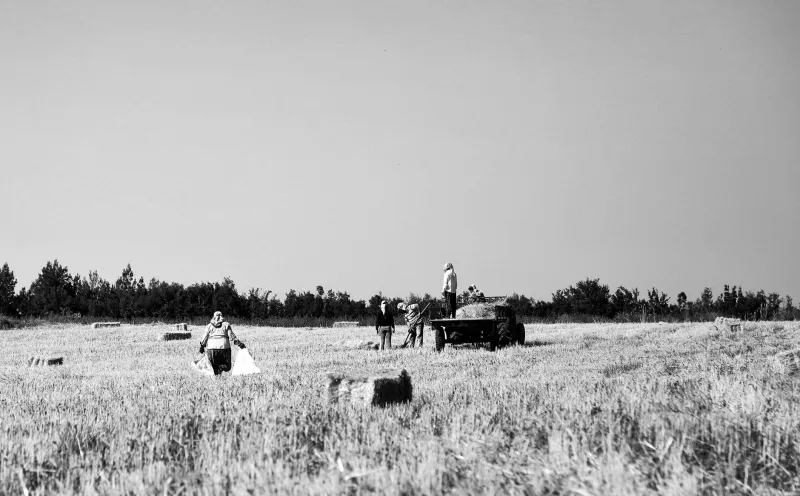
In rural America, which described most of the country well into the 20th century, that negotiation often looked nothing like money changing hands. A farmer might offer a physician a side of pork in exchange for setting a broken leg. A family might trade labor — fixing the doctor's fence, hauling his firewood — for the delivery of a child. These weren't quaint customs. They were survival strategies.
Dr. Francis Weld Peabody, writing in the 1920s, described American patients who delayed seeking care for months because they were quietly calculating whether they could afford to get better. That calculation was brutally rational. A week in a hospital bed could cost what a working man earned in a month. Surgery could cost a year's wages — if you could even find a surgeon willing to operate.
The Financial Catastrophe Hidden Inside Every Illness
The numbers were stark. In 1930, the average American family earned around $1,500 a year. A serious illness — appendicitis, a complicated fracture, pneumonia that required hospitalization — could generate a bill of $300 to $500. That's not a setback. That's a crisis.
Families didn't just dip into savings. Many had no savings to dip into. Instead, they borrowed from relatives, sold furniture, or simply accumulated debt with the doctor and quietly avoided him for years afterward. Some families lost homes. Others pulled children out of school so they could work and help cover medical bills. Getting sick wasn't just a physical ordeal — it was an economic earthquake.
And it wasn't just the poor who were vulnerable. Middle-class families — teachers, shopkeepers, skilled tradespeople — faced the same terrifying arithmetic. One bad year of health could undo a decade of careful saving. The phrase "medical bankruptcy" didn't exist yet, but the reality it describes was everywhere.
How the System Finally Started to Change
The transformation didn't happen all at once. It began, oddly enough, in a hospital administrator's office in Dallas in 1929.
Baylor University Hospital, worried about empty beds and unpaid bills during the early Depression years, struck a deal with local schoolteachers: pay 50 cents a month, and the hospital would cover up to 21 days of care per year. It was a radical idea. It was also, essentially, the birth of Blue Cross.
The model spread slowly through the 1930s, then exploded during World War II for an almost accidental reason. With wages frozen by wartime price controls, companies competing for scarce workers started offering health benefits as a way to attract employees without technically raising pay. The government, rather than cracking down, decided that employer-provided health insurance wouldn't be taxed as income. That single policy decision reshaped American healthcare for the next 80 years.
By the 1950s, employer-sponsored insurance had become standard in large companies. By the 1960s, Medicare and Medicaid extended coverage to the elderly and the very poor. The idea that a medical emergency could financially destroy a working family — while not eliminated — was at least partially buffered for millions of Americans who now had some form of coverage.
The System We Got — and the Gaps It Left Behind
None of this means the story ended happily. The American healthcare system that emerged from this patchwork history is famously complicated, expensive, and uneven. Millions of Americans still delay care because of cost. Medical debt remains one of the leading causes of personal bankruptcy in the United States. The fear that an unexpected diagnosis could derail a family's finances hasn't disappeared — it's just been redistributed.
But here's the thing worth pausing on: the idea that health coverage is something ordinary working people should have access to — that a broken arm shouldn't mean a broken bank account — is genuinely new in the span of human history. It took most of the 20th century to get there, and the debate about how to do it better is still very much alive.
What We Forget When We Swipe the Insurance Card
There's something worth sitting with in all of this. When Americans complain about modern healthcare — the hold times, the prior authorizations, the confusing explanations of benefits — they're not wrong. The system is maddening in ways that feel uniquely American.
But it's also worth remembering what came before. The farmer trading a pig for a splint. The mother choosing between a doctor's visit and the rent. The quiet, desperate arithmetic of people who got sick in an era when illness was allowed to be financially fatal.
We haven't solved the problem. But we've at least decided it is one — and that, compared to where we started, is a bigger shift than it might look.