Smile and Wait Three Weeks: What Photography Looked Like Before Your Phone Did It Instantly
Somewhere in a shoebox in your parents' house, there's probably a photograph from the 1970s or 80s where half the people have their eyes closed, someone's thumb is partially covering the lens, and the whole thing is slightly out of focus. Nobody retook it. That was the photo. It got kept anyway.
That shoebox tells you more about how dramatically photography has changed than any technology article ever could.
The Ritual of Getting Your Picture Taken
For most of American history, having your photograph taken was an event — not an activity. In the 19th century, a portrait sitting at a studio required advance scheduling, formal dress, and enough money that working-class families might save for months. Early exposure times were so long that subjects had to hold perfectly still for several seconds, which is why everyone in old photographs looks slightly alarmed. They weren't. They were just trying not to blur.
The subjects understood, consciously or not, that this image might be one of very few that would ever exist of them. Families might sit for a formal portrait once a decade. Individuals might have fewer than a dozen photographs taken in their entire lives. When someone died, the photographs that remained weren't just keepsakes — they were evidence. Proof the person had existed.
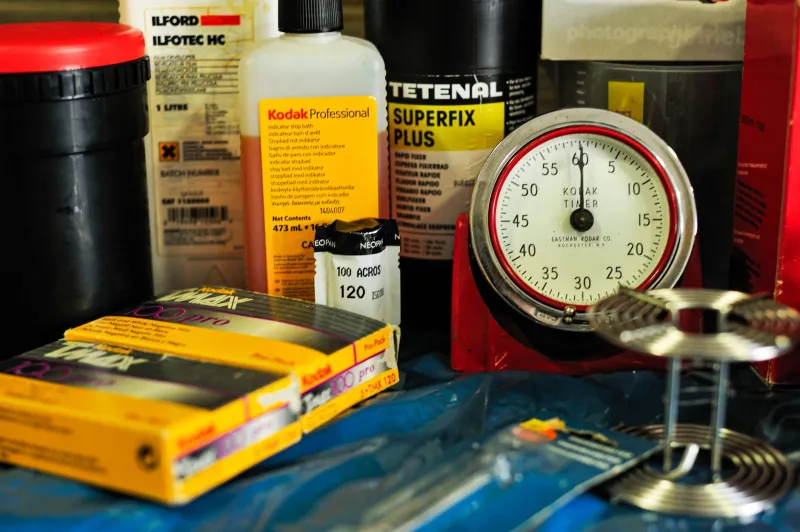
Even as cameras became smaller and more accessible through the early 20th century, the fundamental economics didn't change much. Film cost money. Each frame on a roll represented a real expenditure. And crucially, you wouldn't know if any of it worked until the roll was finished, dropped off at a pharmacy or camera shop, and retrieved days later — sometimes longer in rural areas.
The Agony and the Anticipation of Film
Anyone who grew up shooting on film remembers the particular anxiety of the waiting period. You'd taken the shots. You thought you'd held the camera steady. You were pretty sure the lighting was okay. But you genuinely didn't know. The gap between pressing the shutter and seeing the result could stretch to a week or two, especially if you were the type who waited until you'd shot the full roll of 24 or 36 exposures before dropping it off.
Then you'd pick up the envelope of prints and flip through them with a strange mix of excitement and dread. Some shots were perfect. Some were mysteries — what was I even trying to photograph there? And occasionally, heartbreakingly, the most important moment you'd tried to capture — the birthday candles being blown out, the bride walking down the aisle — had come out blurry, or dark, or simply wrong. There was no going back. The moment was gone, and the photograph wasn't what you'd hoped.
This created something interesting: a natural process of editing before the shooting even happened. Because film was finite and developing it cost real money, people thought before they clicked. You didn't take 47 photos of your lunch. You saved your remaining frames for something that felt worth the expense.
A roll of 24-exposure Kodak film in the 1980s cost around $3 to $5 to buy and another $7 to $10 to develop — call it $12 to $15 total, which in today's money is somewhere north of $35. That's a meaningful amount of money for a guaranteed 24 shots, some of which would inevitably be wasted. Photography was, by necessity, a considered act.
Snapshots, Polaroids, and the Slow Loosening of the Rules
The Polaroid camera, introduced commercially in 1948 and popularized through the 1960s and 70s, was the first crack in the wall between taking a photo and seeing the result. The image developed in front of you, usually within a minute or two. It felt like magic. It also felt slightly transgressive — like cheating the waiting period that had always been part of the deal.
But Polaroid film was expensive, the image quality was inconsistent, and you still only got one copy of each shot. The instant gratification was real, but the scarcity remained. You still thought before you clicked.
The digital camera changed the equation more fundamentally. By the early 2000s, Americans were beginning to shoot without the constraint of a fixed number of frames, review images on a small screen immediately after taking them, and delete the ones that didn't work. The shoebox of blurry, imperfect prints started to feel like a relic from another civilization — which, in a sense, it was.
When Everyone Became a Photographer
The smartphone didn't just make photography easier. It made it invisible — folded into the texture of everyday life in a way that would have been literally unimaginable to someone shooting on film in 1985. The average American now takes more photographs in a single year than most 19th-century families accumulated in a lifetime. A birthday party generates hundreds of images. A meal generates a dozen. A sunset generates a burst mode of 30 nearly identical shots.
The gain is real and remarkable. Moments that once would have gone uncaptured — the spontaneous laugh, the unexpected kindness of a stranger, the mundane Tuesday afternoon that somehow felt perfect — are now preserved with a tap. Memory has been democratized in an extraordinary way.
But something worth noticing has shifted in the process. When photographs were scarce, they were studied. Families gathered around albums. Individual prints were handled carefully, labeled on the back, sometimes framed. The act of looking at a photograph was itself an occasion.
Now, images scroll past in fractions of a second. A photo taken this morning competes with thousands of others on a phone that holds more images than a large photo album store could have stocked in 1975. We take more pictures than ever before and arguably look at fewer of them, at least with any sustained attention.
Did the Difficulty Make It Mean More?
It's worth asking honestly: did photographs mean more when they were harder to take?
Probably yes — and probably no. The images themselves weren't better. The blurry, underexposed prints of the past weren't richer in meaning because they were expensive to produce. But the act of choosing to photograph something, of rationing your frames and accepting the risk that the shot might not work, created a kind of intentionality that's harder to find in the age of unlimited storage.
What we've gained is access. What we've traded away is a certain quality of attention.
The shoebox of imperfect prints still sits in a lot of American homes. And somehow, those blurry, thumb-obscured, slightly-too-dark photographs feel irreplaceable in a way that the ten thousand digital files on your phone probably don't — at least not yet.