From Ownership to Partnership: The Long, Strange Journey of American Marriage
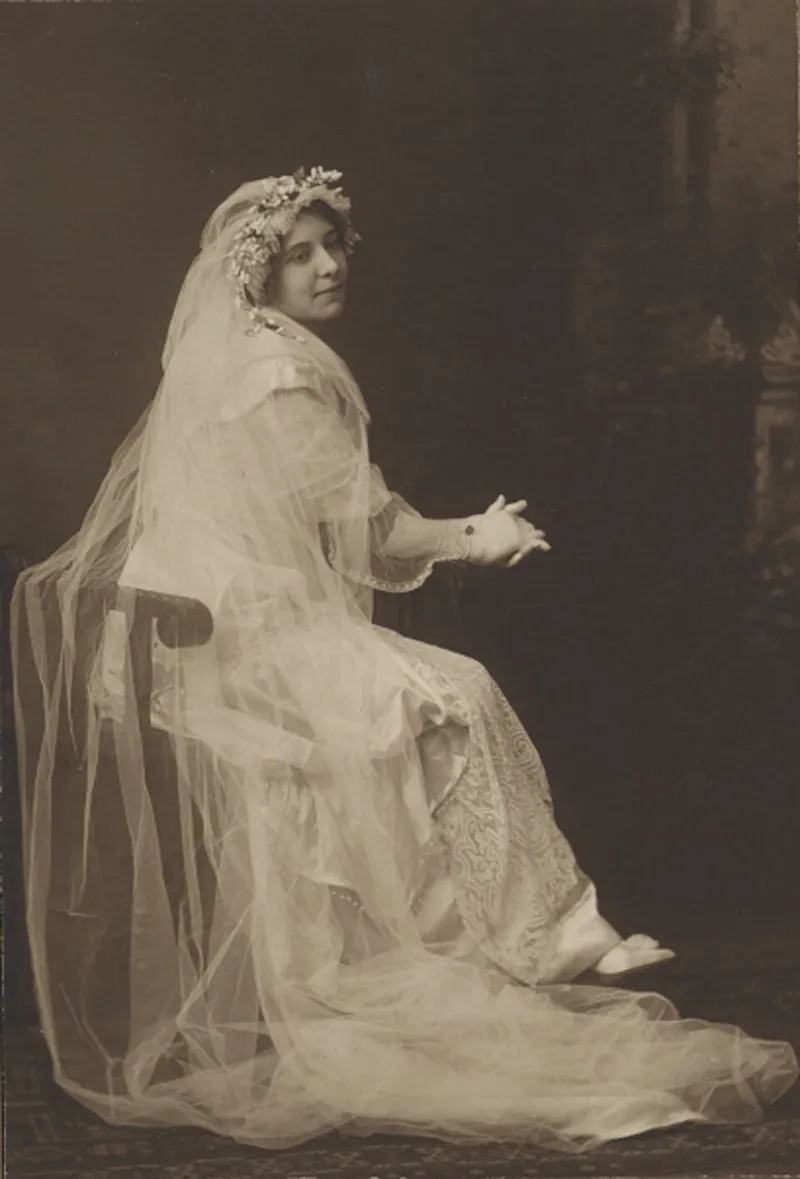
Photo: Smithsonian Institution, No restrictions, via Wikimedia Commons
Imagine signing a contract that stripped you of your name, your wages, your land, and your legal right to exist as an independent person. Imagine that the contract was sealed with a kiss and celebrated with cake.
That was American marriage for most of this country's history.
Today, couples agonize over seating charts, flower arrangements, and whether to do a first look before the ceremony. But for generations of American women, the wedding itself was almost beside the point. What mattered was what happened in the courthouse — or more accurately, what stopped happening there the moment she said "I do."
What 'I Do' Actually Used to Mean
Under English common law, which American colonies inherited and codified, a married woman had no independent legal identity. The doctrine was called coverture, and it meant exactly what it sounds like: a wife was legally covered by her husband. She ceased to exist, in the eyes of the law, as a separate person.
She couldn't own property. Any land she brought into the marriage became his. She couldn't sign a contract, sue in court, or keep the wages she earned. If she worked — and many women did, especially on farms or in family trades — her husband was legally entitled to every cent. She couldn't even refuse his physical advances without legal consequence. Marital rape wasn't recognized as a crime in all fifty states until 1993.
This wasn't considered cruel or unusual. It was just the way things worked. Marriage was, at its core, an economic arrangement. Families negotiated it, lawyers formalized it, and the couple in question often had limited say in the matter. Among wealthier families especially, marriage was about consolidating land, securing alliances, and producing legitimate heirs. Love was a bonus — pleasant if it arrived, but never the point.
For working-class and farming families, the calculus was slightly different but no less practical. A wife was labor. A husband was security. You needed each other to survive, and survival didn't leave much room for romantic idealism.
The Slow Crack in the Foundation
The first serious legal challenge to coverture came not from courts but from state legislatures. New York passed the Married Women's Property Act in 1848, a radical piece of legislation that allowed women to own property in their own names, even after marriage. Mississippi had actually passed a similar law eight years earlier, though it was largely motivated by protecting family assets from a husband's creditors rather than any feminist principle.
 Photo: New York, via wallpaperaccess.com
Other states followed over the following decades. By the end of the 19th century, most American women had at least the theoretical right to own property and keep their wages. But legal rights on paper and lived reality were two very different things. Social pressure, economic dependence, and a complete absence of divorce options kept most women firmly inside marriages they had little power to leave.
Divorce existed, technically. But it required proving fault — adultery, abandonment, cruelty — and the process was expensive, socially devastating, and often practically impossible. A divorced woman in the 1890s or even the 1940s faced ostracism, poverty, and the near-certain loss of her children. Staying in a bad marriage wasn't just expected. For most women, it was the only rational choice.
The 1960s and 70s Changed Everything
The transformation that finally brought American marriage into something resembling its modern form happened fast, historically speaking. Within about fifteen years, the entire legal and cultural architecture of the institution was rebuilt.
California introduced the first no-fault divorce law in 1969, meaning couples could dissolve a marriage simply by declaring it irretrievably broken — no accusations, no proof, no legal theater. By 1985, every state in the country had followed. For the first time in American history, leaving a marriage didn't require a villain.
Around the same time, the women's movement was dismantling the remaining economic dependencies that had kept women trapped. The Equal Credit Opportunity Act of 1974 meant women could finally open bank accounts and apply for credit cards without a husband's signature. Before that, a woman's financial life was almost entirely mediated through a man.
The cultural shift was just as seismic. The idea that marriage should be — above all else — a romantic partnership between equals became not just acceptable but expected. Couples began marrying later. They chose their own partners without family veto. They lived together first. They talked about compatibility, shared values, and emotional connection in ways that would have baffled their great-grandparents.
What We Gained — and What We're Still Figuring Out
The evolution of American marriage represents one of the most profound legal and cultural shifts in the country's history. What was once a property transaction is now, ideally, a freely chosen partnership between equals. Women can leave marriages that don't work. They can own homes, run businesses, and build financial lives entirely independent of a spouse.
But the transformation has also created new pressures. When marriage is no longer an economic necessity, it becomes something more fragile and more demanding. We expect our partners to be best friends, passionate lovers, intellectual equals, co-parents, and financial partners — all at once, for decades. The divorce rate climbed sharply after no-fault laws passed, though it has actually declined since the 1980s as people marry later and more deliberately.
The institution is still evolving. Same-sex marriage became the law of the land in 2015. More Americans than ever are choosing not to marry at all. The definition of what a committed partnership looks like keeps expanding.
None of that would have been imaginable to the woman who stood at an altar in 1850 and signed away her legal identity along with her vows. She didn't get to choose what marriage meant. We do — and that shift alone is worth pausing to appreciate.