Dressed to Leave the House: When Americans Treated Every Errand Like a Red Carpet Event
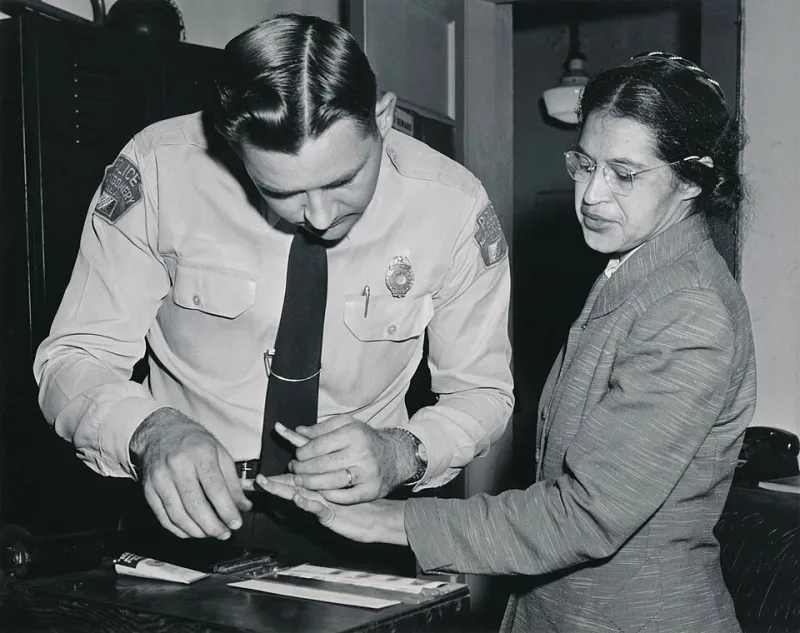
Photo: Gene Herrick for the Associated Press; restored by Adam Cuerden, Public domain, via Wikimedia Commons
Somewhere between the white-gloved housewife of the 1950s and the person currently boarding a Spirit Airlines flight in a full set of pajamas, America quietly abandoned one of its oldest and most rigid social contracts: the idea that how you dressed in public was a direct reflection of your moral character.
It wasn't just about fashion. It was about respect — for your neighbors, your community, and yourself. And for most of American history, the rules were ironclad.
When Your Outfit Was a Social Statement
In the early twentieth century, getting dressed wasn't a personal choice. It was a performance, and the audience was everyone you'd encounter from the moment you stepped off your front porch. Working-class men wore suits to church, to the market, and to social gatherings. Women coordinated hats with gloves, gloves with handbags, and handbags with shoes. Children were dressed in miniature versions of adult formal wear, because appearing disheveled in public was considered a sign of poor upbringing — or worse, poverty.
The rules weren't written down anywhere, but everyone knew them. A woman seen in public without a hat before the 1940s risked genuine social judgment. Men in shirtsleeves — without a jacket — were considered underdressed in most public settings. Even the working poor made their best effort on Sundays, which is where the phrase "Sunday best" came from: one good outfit, kept clean and pressed specifically for public appearances.
This wasn't vanity for its own sake. Clothing was one of the primary ways Americans communicated class, aspiration, and respectability in an era before social media profiles or LinkedIn pages did that work for them.
The Cracks Begin to Show
The first serious blow to formal American dress culture came from an unlikely source: World War II. Fabric rationing forced manufacturers to cut back on excess material, which meant narrower lapels, fewer pleats, and shorter hemlines. Practicality began to compete with formality, and practicality started winning.
 Photo: World War II, via cdn.britannica.com
Then the returning veterans of the late 1940s brought something home with them: a deep, earned resistance to unnecessary discomfort. Men who had worn military uniforms for years weren't exactly eager to spend their peacetime in stiff collars and wool suits. Casual sportswear — previously reserved for golf courses and beach clubs — started creeping into everyday life.
The real earthquake came in the 1960s. Youth culture didn't just push back against formal dress codes; it declared war on them. Jeans, once strictly workwear, became a political statement. T-shirts moved from undershirts to outerwear. The counterculture actively rejected the idea that clothing signaled virtue, and a significant chunk of mainstream America eventually followed.
Corporate America's Slow Surrender
Even as street fashion loosened up, the office held the line for decades. The suit remained the uniform of professional America well into the 1980s, and for many industries, through the 1990s. Then came Silicon Valley.
 Photo: Silicon Valley, via image.cnbcfm.com
The tech industry's deliberate embrace of hoodies, jeans, and sneakers as power attire did something remarkable: it reframed casual dress as a sign of confidence rather than carelessness. If Mark Zuckerberg could run a billion-dollar company in a gray T-shirt, the logic went, maybe the suit wasn't actually doing the work everyone thought it was.
 Photo: Mark Zuckerberg, via www.netpublic.fr
"Casual Friday" — which began as a once-a-week concession in corporate America during the 1990s — gradually swallowed the rest of the week. By the 2010s, entire industries had abandoned dress codes almost entirely. And then the pandemic arrived and finished the job.
When millions of Americans spent eighteen months on video calls from their living rooms, the top-half-dressed, bottom-half-in-pajamas compromise became a cultural meme and then a permanent reality. Athleisure, already a multi-billion-dollar industry before 2020, exploded. The idea of "getting dressed" for work began to feel optional in a way it never had before.
What We Actually Lost — and What We Didn't
It's tempting to look back at the era of gloves and Sunday hats with pure nostalgia, but the reality was more complicated. Rigid dress codes weren't just about aesthetics — they were tools of social control. They enforced conformity, punished people who couldn't afford the right clothes, and placed an enormous burden on women in particular, who were expected to maintain elaborate wardrobes while managing households on tight budgets.
The collapse of dress codes has, in many ways, democratized public life. You can walk into a nice restaurant in most American cities today without a jacket and nobody will turn you away. You can travel across the country without performing a costume change at every stop. That's not nothing.
But something was also lost in the translation. The old rules carried within them a certain idea — that public space was shared space, and that how you showed up in it reflected your awareness of other people. Whether or not you agree with that philosophy, it's hard to argue that a culture where airport lounges look like a sleepover party has fully replaced it with something better.
The New Dress Code
Here's the strange thing: Americans haven't actually stopped caring about clothing. They've just moved the goalposts. Sneaker culture commands hundreds of dollars per pair and has its own dedicated resale economy. Streetwear drops sell out in minutes. Instagram and TikTok have made personal style more visible — and more scrutinized — than at any point in history.
We haven't abandoned dress codes. We've just replaced the old ones with new ones that are harder to read and more individualized. The rules still exist. They're just different now — and a lot more comfortable.
Which, when you think about it, might actually be progress.