One Room, Eight Grades, and a Lifetime of Learning: The Radical Transformation of American Schools
Imagine walking into Miss Sarah's schoolhouse in rural Kansas, 1890. Twenty-three students aged 6 to 16 sit on wooden benches, sharing slates and textbooks. The older children help teach the younger ones while Miss Sarah manages eight different grade levels simultaneously. School runs from October to April—children are needed for planting and harvest. Most students will never see the inside of a high school.
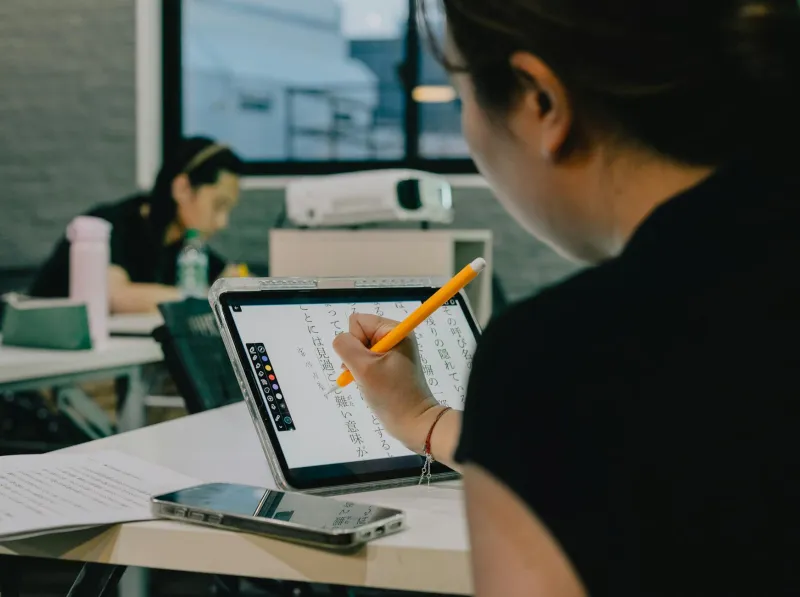
Now picture a modern American classroom: Each student has a personal tablet connected to the internet, accessing more information than existed in entire libraries a century ago. The teacher specializes in one subject for one grade level. Students attend school for 13 years minimum, with many continuing to college that their great-grandparents couldn't have imagined affording or needing.
This transformation represents one of the most dramatic shifts in American life—changing not just how we learn, but what we believe education should accomplish.
When School Was a Seasonal Luxury
In 1890, education was a privilege that most American families couldn't fully afford. Children were essential workers—boys helped with farming and manual labor, girls assisted with household duties and childcare. School was something you did when you weren't needed elsewhere.
The typical rural school served a radius of several miles, with children walking up to five miles each way. In winter, many simply couldn't make the journey. School terms were deliberately scheduled around agricultural needs: longer in winter when farm work was lighter, shorter or nonexistent during planting and harvest seasons.
Most one-room schoolhouses operated with minimal resources. Students shared textbooks—often bringing them from home if their families owned any. Paper was expensive, so children practiced writing on individual slates that could be erased and reused. The McGuffey Readers, used nationwide, taught reading through moral lessons about hard work, religious devotion, and respect for authority.
 Photo: McGuffey Readers, via i.etsystatic.com
Miss Sarah, like most teachers of her era, was typically an unmarried woman in her late teens or early twenties. She was expected to resign if she married—teaching was considered inappropriate for wives and mothers. Her salary was often paid in room and board rather than cash, and she moved between families throughout the school year.
The Revolutionary Idea of Age-Based Grades
The concept of separating children by age rather than ability was a radical innovation that emerged in urban areas during the late 1800s. Previously, education was individualized by necessity—older students helped younger ones, and everyone progressed at their own pace.
The new "graded" system promised efficiency and standardization. Instead of one teacher managing eight different levels, schools could hire specialists for each grade. Students would advance through a predictable sequence, mastering specific skills at predetermined ages.
This shift reflected changing beliefs about childhood itself. Americans began viewing children as requiring systematic development rather than just practical training. The idea that every child should receive the same educational foundation—regardless of their family's occupation or economic status—was revolutionary.
By 1920, most American cities had implemented age-based grade systems. Rural areas followed more slowly, with many one-room schools persisting into the 1950s in remote areas.
When High School Was for the Elite
Perhaps the most dramatic change involves our expectations for how long children should attend school. In 1890, fewer than 7% of American teenagers graduated from high school. Most children completed their formal education by age 14, if they were fortunate enough to attend at all.
High school was primarily for wealthy families preparing their children for college or professional careers. The curriculum focused heavily on classical subjects—Latin, Greek, rhetoric, and philosophy—that had little practical application for most working Americans.
Vocational training happened through apprenticeships, not schools. Boys learned trades by working alongside skilled craftsmen, while girls learned domestic skills from their mothers and other women in their communities.
The transformation began during the Progressive Era, as reformers argued that industrial society required a more educated workforce. Child labor laws gradually removed children from factories and farms, while compulsory education laws required them to attend school instead.
By 1940, high school graduation had become the norm rather than the exception. Today, we consider it so essential that dropping out before age 18 requires special permission in most states.
The Digital Revolution in Every Backpack
Today's students carry more computing power in their backpacks than existed in entire universities just decades ago. The average smartphone contains access to virtually all human knowledge—a reality that would have seemed like magic to Miss Sarah and her students.
Modern education emphasizes skills that didn't exist in 1890: digital literacy, collaborative problem-solving, and critical analysis of information sources. Students routinely video-conference with classrooms around the world, conduct virtual science experiments, and submit assignments through online platforms.
The role of teachers has transformed from information deliverer to learning facilitator. Instead of memorizing facts from limited textbooks, students learn to evaluate and synthesize information from countless sources. The challenge isn't accessing knowledge—it's developing the judgment to use it wisely.
Specialized Learning for Specialized Lives
Perhaps most dramatically, we've moved from education that prepared students for fairly predictable adult roles to schooling that must prepare them for careers that don't yet exist.
Miss Sarah's students knew they would likely become farmers, laborers, wives, or mothers. Education provided basic literacy and moral instruction sufficient for these roles. Today's students face a future where they may change careers multiple times, requiring adaptability and continuous learning that the one-room schoolhouse couldn't have imagined.
Specialization now begins in elementary school. Students receive separate instruction in reading, math, science, social studies, art, music, and physical education from teachers trained specifically in each subject. Advanced students take calculus in high school and earn college credits before graduating.
The Price of Progress
This transformation hasn't come without costs. The intimate, multi-age learning environment of the one-room school fostered responsibility and mentorship that modern age-segregated classrooms struggle to replicate. Students learned by teaching others—a powerful educational tool that we've largely abandoned.
The seasonal rhythm that connected education to natural cycles and family needs has been replaced by rigid schedules that often conflict with family life and community traditions.
Most significantly, we've moved from education that was free or very low-cost to a system that requires massive public investment and, for higher education, often burdens families with crushing debt.
Knowledge Without Limits
Yet the gains are extraordinary. Today's American students have educational opportunities that would have been unthinkable to previous generations. A child in rural Kansas can now access the same online courses as students in New York or California. Virtual reality lets them walk through ancient Rome or observe molecular structures up close.
We've democratized not just access to education, but access to the highest levels of human knowledge. The question facing us now isn't whether our students can learn—it's helping them navigate an almost infinite sea of information to find wisdom.
The journey from Miss Sarah's one-room schoolhouse to today's connected classrooms reveals how completely American society has reimagined childhood, knowledge, and the purpose of education itself.