Your DNA Was Always the Missing Piece: How Medicine Finally Learned to Treat You Like an Individual
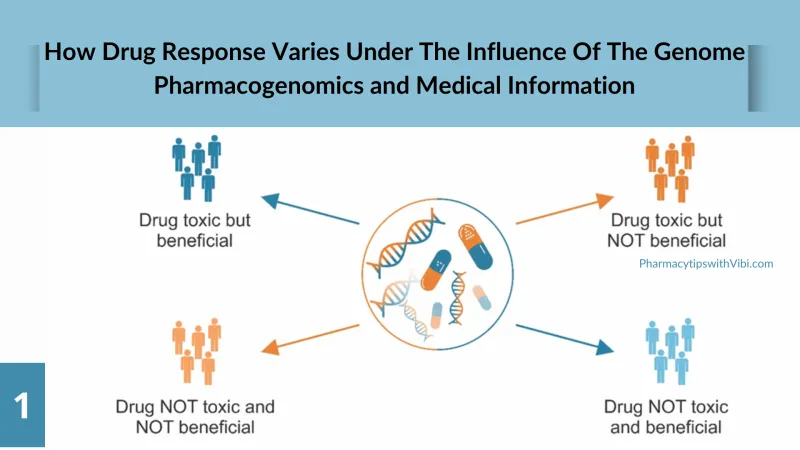
Photo: pharmacogenomics genetic testing laboratory DNA medicine, via pharmacytipswithvibi.com
For decades, getting a prescription filled was a bit like ordering from a restaurant that only had one dish. Your doctor wrote something on a slip of paper, the pharmacist filled a bottle, and whatever happened next was largely a matter of biology and luck. Some people got better. Some didn't. Some had reactions that sent them back to the doctor with a whole new set of problems. Nobody thought too hard about why, because there wasn't much anyone could do about it.
That era is ending. And the story of how we got from guesswork to genetic blueprints is one of the most underappreciated revolutions in modern American health care.
The Era of One-Size-Fits-All Medicine
Back in the 1950s and 1960s, the pharmaceutical industry was booming. New drugs were coming to market at a pace that felt miraculous after decades of limited options. Penicillin had already changed everything. Now came antidepressants, blood pressure medications, early chemotherapy agents — a whole new pharmacological toolkit.
The problem was that doctors were working almost entirely in the dark when it came to individual response. A physician might prescribe an antidepressant to ten different patients with similar symptoms and get ten completely different outcomes. One patient thrived. Another felt nothing. A third experienced side effects severe enough to stop treatment altogether. The standard approach was to try something, wait several weeks, and then adjust — a process that could take months and cause real harm along the way.
This wasn't negligence. It was the ceiling of available knowledge. Doctors understood that people were different, but they had no reliable way to predict how different, or what those differences meant for drug metabolism. The body's internal chemistry was still largely a black box.
Patients in the 1970s and 1980s who were prescribed blood thinners like warfarin — still one of the most commonly prescribed drugs in the country — faced a particularly frustrating version of this problem. Warfarin has a narrow therapeutic window: too little and it doesn't prevent clots, too much and it causes dangerous bleeding. Finding the right dose required weeks of blood tests and constant adjustment. Some patients never quite got it right.
What Changed Everything
The Human Genome Project, completed in 2003, didn't immediately transform your local pharmacy. But it planted the seed for a field called pharmacogenomics — the study of how your genetic makeup influences how you respond to drugs.
The core insight is both simple and staggering: your liver processes medications using enzymes, and the genes that code for those enzymes vary significantly from person to person. Some people are "rapid metabolizers" who burn through a drug so fast it never reaches therapeutic levels. Others are "poor metabolizers" who accumulate drugs in their system until the dose that works fine for most people becomes toxic for them.
This isn't a rare edge case. It affects enormous numbers of people across a wide range of medications — antidepressants, antipsychotics, blood thinners, pain medications, cholesterol drugs, and more. Researchers now estimate that adverse drug reactions contribute to over 100,000 deaths annually in the United States and account for billions in avoidable healthcare costs. A significant portion of those reactions were, in principle, predictable.
The Test That Changes the Conversation
Today, a growing number of hospitals, clinics, and direct-to-consumer services offer pharmacogenomic testing — typically a simple cheek swab that gets analyzed in a lab. The results map out how your specific genetic variants are likely to affect your response to dozens of commonly prescribed medications.
For a patient about to start antidepressants, that test might reveal that two of the most commonly prescribed SSRIs are likely to be ineffective for them based on their metabolizer status — before they've spent three months waiting to find out the hard way. For a cancer patient starting chemotherapy, it might flag a genetic variant that dramatically increases the risk of severe toxicity from a standard protocol, prompting a switch to an alternative regimen before treatment begins.
Major health systems including Mayo Clinic, Vanderbilt University Medical Center, and St. Jude Children's Research Hospital have embedded pharmacogenomic data directly into electronic health records, so a prescribing physician gets an automatic alert if they're about to order something that conflicts with a patient's genetic profile. It's the kind of personalization that doctors in 1965 would have considered science fiction.
The Vision Was Always There
Here's what makes this story particularly interesting: the idea of individualized medicine isn't new. Physicians have always known, in a general sense, that patients respond differently. The frustration of the mid-twentieth century wasn't a lack of imagination — it was a lack of tools.
Doctors noticed patterns. They observed that certain families seemed to react badly to specific drugs. They adjusted doses based on body weight, age, kidney function. They did everything they could with what they had. The ambition to treat each patient as a unique biological individual was always present. The science just hadn't caught up yet.
Now it has. And the gap between what medicine aspired to and what it could actually deliver — a gap that persisted for most of the twentieth century — is finally, meaningfully closing.
What Still Needs to Happen
Pharmacogenomic testing isn't yet standard practice at most American doctor's offices. Insurance coverage remains inconsistent, and many physicians haven't been trained to interpret genetic reports or integrate them into prescribing decisions. There's also a data equity gap: most pharmacogenomic research has been conducted on populations of European descent, which means the predictive accuracy can be lower for patients from other backgrounds.
These are real limitations. But the trajectory is clear. The question for American health care isn't really whether personalized prescribing will become the norm — it's how quickly and how equitably that transition happens.
For now, if you've ever had a medication that didn't work the way it was supposed to, or experienced a side effect your doctor seemed surprised by, there's a reasonable chance your genes were trying to tell someone something. We just didn't have a way to listen. We're starting to learn how.