The Last Time You Were Truly Lost: What Happened to America's Sense of Direction
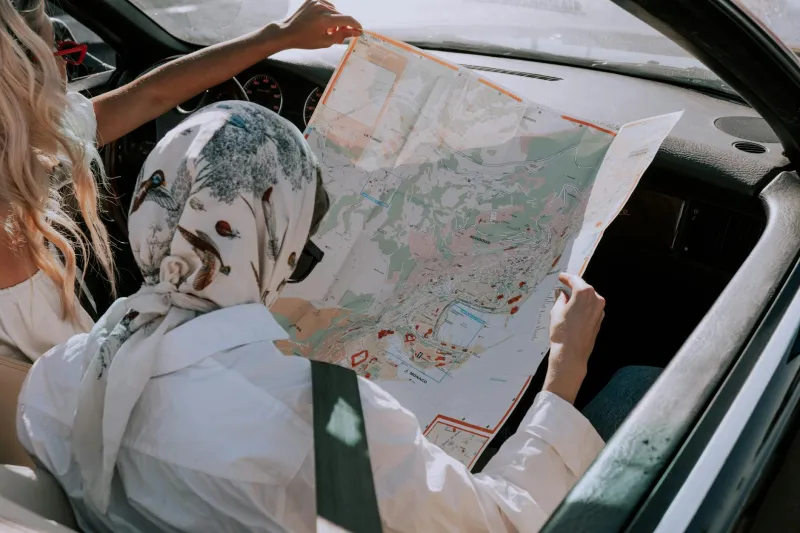
There's a specific kind of stress that doesn't really exist anymore. It happened in the car, usually somewhere between two towns you'd never heard of, when the handwritten directions ran out and the gas station you were supposed to turn at had clearly been a parking lot for a decade. You'd slow down, squint at the map folded across the steering wheel, argue with whoever was in the passenger seat, and eventually — somehow — figure it out.
That experience is almost completely gone now. And depending on who you ask, that's either a triumph or a quiet tragedy.
The Paper Map Era Was a Skill, Not a Struggle
For most of the twentieth century, navigating was something Americans actively did. Road atlases lived in the back seat. Gas stations sold state maps for a dollar. Before a big trip, you sat at the kitchen table the night before and traced the route with your finger, maybe writing out turn-by-turn notes on a piece of paper you'd tuck into the sun visor.
It required actual spatial reasoning — understanding where north was, how highways connected, what a scale bar meant. Kids grew up absorbing this. They'd watch their parents read maps and start to understand how geography worked. By the time they were driving themselves, most people had a rough mental model of their region that didn't require external input to activate.
Asking strangers for directions was also just... normal. You'd pull into a diner, describe where you were headed, and get a response that sounded like oral history: "Go past where the old Sears used to be, take the fork after the water tower, and if you hit the county line you've gone too far." It was imprecise, occasionally wrong, and oddly social. You had a brief, real interaction with another human being, and then you drove on.
When Google Maps Changed Everything
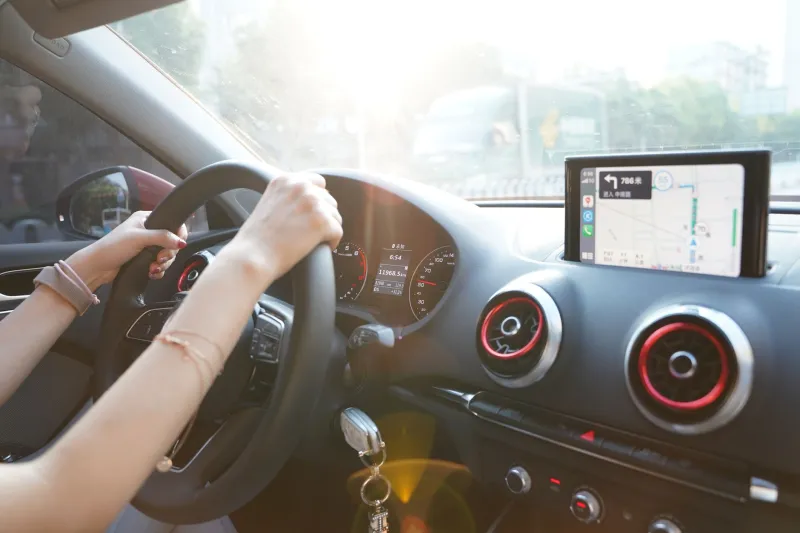
MapQuest technically started the shift in the late 1990s, giving Americans printable turn-by-turn directions for the first time. But it was the arrival of GPS navigation — first in dedicated devices like Garmin and TomTom, then baked into every smartphone — that fundamentally rewired how people moved through space.
By the early 2010s, the idea of consulting a paper map had started to feel almost quaint. Today, a significant portion of Americans under 30 have never used one in a meaningful way. Studies on spatial cognition have found that regular GPS use correlates with reduced hippocampal engagement — the part of the brain that builds and maintains mental maps. In plain terms: when the app does the navigating, the brain stops bothering to learn the route.
This isn't just theoretical. Ask someone who's been driving to the same office for three years via GPS to draw you a rough map of the route. Many can't. They know the turns when they see them, prompted by the voice in their pocket. Without it, the knowledge simply isn't there.
What We Gained — and It's Genuinely a Lot
Let's be fair about the upside, because it's enormous. Getting lost used to carry real consequences. Women traveling alone faced safety risks when stranded in unfamiliar areas. Families missed flights. Deliveries failed. People wasted hours circling industrial zones looking for an address that turned out to be on the other side of a highway.
GPS democratized navigation in a powerful way. You no longer need local knowledge to move confidently through an unfamiliar city. Tourists can explore without anxiety. Immigrants can navigate a new country from day one. First responders get to emergencies faster. The logistics industry — and by extension, most of the modern economy — runs on GPS precision in ways that simply weren't possible before.
For accessibility, the impact has been transformative. People with anxiety, cognitive differences, or visual impairments gained independence that paper maps could never have offered.
The Serendipity Problem
Here's the thing nobody talks about enough: getting lost used to produce discoveries. You'd take a wrong turn in a small town and stumble onto a diner that became a family tradition. You'd miss the highway exit and end up on a two-lane road through countryside you'd have never seen otherwise. The inefficiency had a texture to it — a richness that optimized routing can't replicate.
Travel writers and road-trip enthusiasts have been mourning this for years. When an algorithm calculates the fastest path, it strips out the detours. And the detours were often the whole point.
There's also something worth examining in the psychological shift from figure it out to follow instructions. Navigation used to be a problem you solved. Now it's a task you execute. That's a subtle but meaningful difference in how the brain engages with the environment.
Finding Balance in the Blue-Dot World
None of this means you should throw your phone out the window and buy a Rand McNally. But there's a growing movement — especially among younger travelers — toward intentional analog navigation. Some road-trippers now deliberately use paper maps for parts of their journeys. Travel writers advocate for "GPS-free days" in new cities. Parents are starting to teach their kids to read maps the way previous generations taught them to tell time on analog clocks — not because it's essential, but because it builds something.
What it builds is orientation. A sense of where you are in the world, not just where the app says you are. The confidence that if the signal drops, you won't be helpless.
America evolved from a nation of navigators into a nation of followers. The convenience is real and the benefits are undeniable. But somewhere between the last folded map and the first voice prompt, we handed over a small piece of our independence — and most of us never even noticed it leave.