Dressed to Leave the House: The Slow Death of America's Public Dress Code
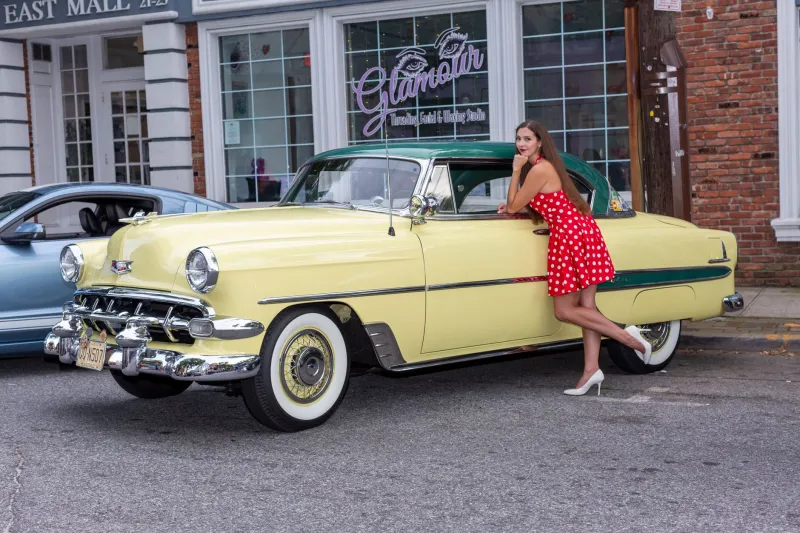
Dressed to Leave the House: The Slow Death of America's Public Dress Code
Picture a Tuesday morning in 1952. A woman in Cincinnati needs to pick up flour, drop off a library book, and stop by the bank. Before she does any of that, she puts on a dress, clips on earrings, and checks her seams are straight. Her husband, heading to the hardware store, wears slacks and a collared shirt. Neither of them thinks twice about it. That's just what you do when you go out.
Now picture any Tuesday morning in 2024. The sweatpants are fine. The airport pajamas are fine. The hoodie worn to a wedding reception afterparty is, apparently, also fine. Something enormous shifted in American life between those two Tuesdays — and most of us barely noticed it happening.
When Clothing Was a Social Language
For much of American history, what you wore in public wasn't really about personal expression. It was communication. It told strangers your status, your respectability, your place in the community hierarchy. Working-class families saved their best clothes for Sundays and special occasions, but even their everyday public wear followed strict unwritten rules. Men wore hats. Women wore gloves to church. Children were dressed like miniature adults for any outing that mattered.
The stakes were real. In tight-knit communities where everyone knew everyone else, appearing disheveled in public wasn't just bad manners — it reflected on your whole family. Department stores in the 1940s and '50s had dress codes for customers. Restaurants turned people away for not wearing jackets. Airlines in the jet age expected passengers to dress as though they were attending a business lunch, because in many ways, they were. Flying was expensive, exclusive, and treated accordingly.
This wasn't purely about vanity. Clothing enforced social boundaries, signaled effort, and communicated respect — for the occasion, for the people you'd encounter, and for yourself. Getting dressed properly was a form of civic participation.
The Great Unraveling
The slide started in the 1960s, accelerated through the '70s, and never really stopped. Youth culture pushed back against conformity with denim and protest T-shirts. The women's liberation movement challenged the idea that women should spend hours corseted and coiffed just to be taken seriously. Casual Fridays crept into corporate America in the 1980s and eventually swallowed the entire workweek.
Then came the real dismantler: the home office. Remote work, which existed in limited forms long before the pandemic but exploded after 2020, erased the last major dress code that millions of Americans followed daily. When your commute is twelve steps and your colleagues see you from the shoulders up on a laptop screen, the bottom half of your outfit becomes genuinely irrelevant. Zoom calls normalized the concept of being professionally dressed from the waist up and completely comfortable from the waist down. It's not laziness — it's rational adaptation.
Athleisure finished the job. When Lululemon convinced America that yoga pants were appropriate for brunch, grocery runs, and school pickup, the final wall came down. Comfortable clothing stopped being what you wore at home and became what you wore everywhere.
What the Data Actually Shows
The numbers are striking. In 1950, American men owned an average of one suit for every two dress shirts. By 2020, suit sales had declined so dramatically that major retailers began quietly discontinuing men's formalwear sections altogether. The necktie industry, which peaked in the mid-20th century, has shrunk by more than 50% since the 1990s. Meanwhile, the global athleisure market — essentially nonexistent as a category forty years ago — is now worth hundreds of billions of dollars.
Churches, once among the last holdouts of formal dress expectations, have largely surrendered. Many megachurches actively encourage casual dress as a way of welcoming new members who might feel intimidated by formality. Even the most traditional institutions — courthouses, fine dining restaurants, theaters — have relaxed their standards to the point where enforcement feels almost quaint.
The Psychology of Getting Dressed
Here's where it gets genuinely interesting. Researchers have found that what we wear affects how we think and behave — a phenomenon called "enclothed cognition." Studies suggest that people in more formal attire tend to think more abstractly, negotiate more confidently, and project more authority. The act of dressing up, it turns out, does something to the brain that sweatpants simply don't.
At the same time, the psychological cost of rigid dress codes was real and unevenly distributed. For women especially, the expectation of always being perfectly put together — hair, makeup, stockings, heels — represented hours of unpaid labor every single week. For lower-income Americans, maintaining appropriate public attire was a genuine financial burden. The casualization of American dress isn't just laziness; for many people, it was a genuine liberation.
So What Did We Actually Lose?
Probably something, even if it's hard to name precisely. There's a reason job interviews still make people nervous about what to wear — because we understand intuitively that presentation signals intention. The ritual of dressing up for something marks it as important, separates it from the ordinary flow of the day. When everything is equally casual, nothing feels particularly special.
The disappearance of public dress codes also removed a shared visual language that once told you something about the people around you — not their income or their worth, but their relationship to the moment you were both in. A man in a suit at a funeral and a man in a suit at a job interview are communicating different things, and both are communicating something.
America didn't lose its fashion sense. It lost its consensus about when clothes matter. Whether that's progress or a subtle impoverishment of public life depends entirely on which Tuesday morning you think sounds better.