The Daily Food Grind: How American Families Fed Themselves Before the Supermarket Existed
The Daily Food Grind: How American Families Fed Themselves Before the Supermarket Existed
Picture your last grocery run. Maybe you grabbed a cart, wandered through aisles stocked with thousands of items, picked up everything from chicken breasts to laundry detergent, and were back in your car within 45 minutes. Maybe you didn't even leave the house — you ordered online and someone brought it to your door.
Now try to imagine doing all of that without any of those options. No supermarket. No refrigerator. No frozen food. Just you, your neighborhood, and a very full schedule.
That was everyday life for most American families well into the mid-20th century.
A Morning Routine Built Around Food
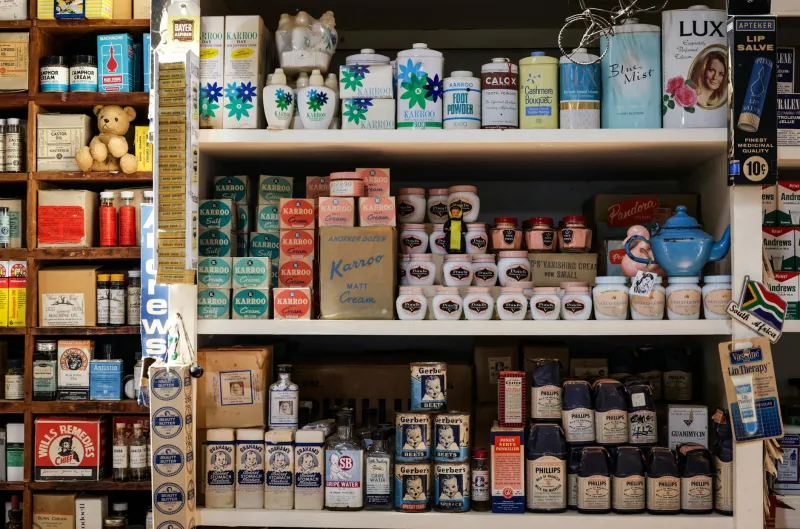
For a typical American housewife in 1910 or 1920, food procurement wasn't a weekly errand — it was a daily mission. Keeping a household fed required visits to several separate establishments: the butcher for meat, the baker for bread, the greengrocer for produce, the dairy for milk and eggs. Each shop was its own relationship, its own negotiation, its own trip.
The milkman was a fixture of this world. He arrived before dawn, leaving glass bottles on the doorstep, and the empty bottles were set out the night before in exchange. It sounds quaint now, but it was a logistical necessity. Without reliable refrigeration, milk spoiled quickly. You needed fresh delivery, often daily, to keep a family supplied.
The icebox — the precursor to the modern refrigerator — was the central food storage technology of the era. An actual block of ice, delivered by yet another service worker, sat in an insulated cabinet and kept things cool for a day or two. Homemakers had to plan carefully around the ice delivery schedule, time purchases accordingly, and deal with the constant reality that food went bad fast.
The Hidden Cost of Feeding a Family
The time investment was enormous. Historians estimate that early 20th century homemakers spent upward of 40 to 50 hours per week on domestic tasks, with food-related work — shopping, preserving, cooking, cleaning up — consuming a significant chunk of that. This wasn't a leisurely lifestyle choice. It was the baseline requirement for keeping a household running.
Preservation was a major part of that workload. Canning vegetables at the end of summer, curing meats, pickling — these weren't hobbies. They were survival strategies. A family that didn't put up enough preserved food before winter ran real risks. Rural families in particular operated with a level of food self-sufficiency that's almost unimaginable today. A kitchen garden, a few chickens, a root cellar full of jarred goods — that was the infrastructure of eating.
For urban families, the calculus was slightly different but no less demanding. City dwellers relied more heavily on the commercial food system, which meant more trips, more carrying, more coordination. Grocery shopping before the era of the automobile meant carrying everything home on foot or by streetcar. Heavy, awkward, and exhausting.
The First Supermarkets Changed Everything — Slowly
The concept of the self-service grocery store arrived in America earlier than most people realize. Piggly Wiggly, founded in Memphis in 1916, is often credited as the first true self-service grocery — a radical idea at the time. Before that, you told a clerk what you wanted, and they retrieved it for you from behind a counter. Piggly Wiggly let customers walk the aisles and pick items themselves. It sounds basic. At the time, it was revolutionary.
But the modern supermarket — large-format, car-accessible, stocked with hundreds of product categories — didn't really take hold until the 1930s and 1940s. King Kullen, which opened in Queens, New York in 1930, is widely considered the first true supermarket in the American sense: a large store, low prices, high volume, designed for shoppers arriving by car.
The spread of electric refrigerators in American homes through the 1930s and 40s changed the equation dramatically. Suddenly, families could buy in larger quantities and store food safely for days or weeks. The daily trip to the butcher became a weekly one. The icebox and the iceman both slowly became obsolete.
From Icebox to Instacart
The transformation accelerated through the postwar boom. Suburban expansion, car ownership, and the rise of frozen foods in the 1950s and 60s reshaped American food culture completely. TV dinners, frozen vegetables, and packaged convenience foods weren't just products — they were a declaration that the old daily grind of food procurement was over.
Today, the average American supermarket stocks somewhere between 30,000 and 50,000 individual products. Same-day grocery delivery is available in most major cities. You can order groceries from your phone at midnight and have them arrive before breakfast.
The contrast with the icebox-and-milkman era is almost hard to process. What once required hours of daily effort — coordinating multiple vendors, managing spoilage, preserving food by hand — has been compressed into an app notification.
What We Stopped Noticing
There's a version of this story that's purely about convenience, and that's real. But there's also something worth noticing about what was lost. Those daily trips to the butcher and the baker built neighborhood relationships. People knew where their food came from, who grew it, who made it. The food system was local, visible, and personal in ways that a 50,000-item warehouse store simply isn't.
Neither version is purely better. But understanding how recently the old system existed — and how completely it disappeared — is a reminder of just how fast the world we think of as normal was actually built.