Dinner Used to Be a Full-Time Job — Now It's a Few Taps on Your Phone
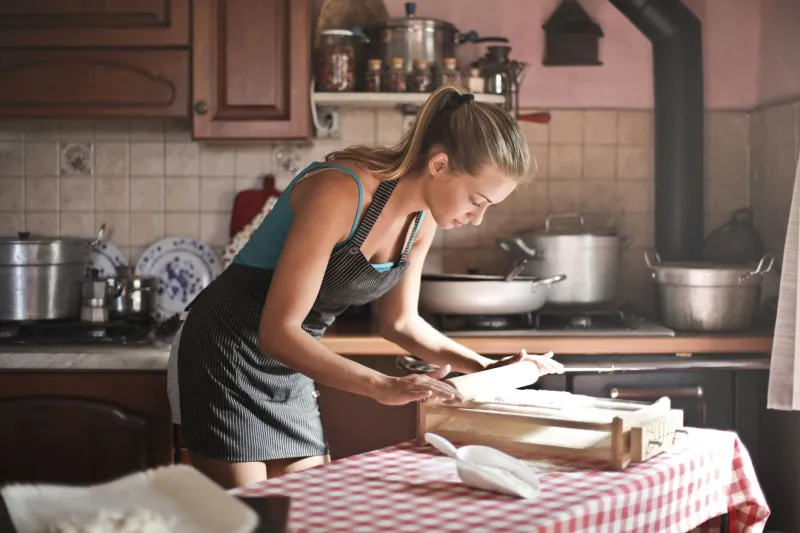
Dinner Used to Be a Full-Time Job — Now It's a Few Taps on Your Phone
Somewhere in America right now, someone is staring at a food delivery app, frustrated that their Thai food is taking 35 minutes. A hundred years ago, that same frustration would have been directed at the ice man for showing up a day late and letting the butter go soft.
The gap between those two experiences tells you almost everything about how dramatically American life has changed — and how little we tend to notice it.
The Ice Man Controlled Your Menu
Before refrigeration became a household standard in the 1930s and 40s, food procurement wasn't a casual errand. It was a logistical operation that shaped the entire rhythm of daily life.
Most American households relied on an icebox — a literal wooden cabinet packed with a block of ice delivered by a horse-drawn cart a few times a week. The ice man's schedule wasn't just a convenience issue. It determined what you could safely store, how long meat could sit before it turned, and whether milk would survive until Tuesday.
Housewives — and it was almost exclusively women doing this work — had to plan meals around delivery windows, seasonal availability, and the hard limits of what an icebox could actually preserve. There was no grabbing a rotisserie chicken on the way home. There was no "we'll figure it out when we get there." A family that didn't plan carefully didn't eat well. Sometimes they didn't eat safely.
Grocery shopping itself was a multi-stop production. You visited the butcher for meat, the greengrocer for produce, the dry goods store for staples. Many neighborhoods had daily markets because nothing stayed fresh long enough to shop weekly. The mental load was enormous — tracking what was running low, what was in season, what could be preserved, what needed to be used immediately before it spoiled.
The Weekly Planning Session That Nobody Talks About
By the mid-20th century, refrigerators had arrived and supermarkets were consolidating those multiple stops into one. But even then, feeding a household required a level of deliberate planning that modern Americans have almost entirely abandoned.
Saturday morning grocery runs were a serious undertaking. Families sat down with paper lists, checked what was in the pantry, compared prices from newspaper circulars, and mapped out the week's meals in advance. Coupons were clipped, budgets were calculated, and the weekly shop was a structured event — not a spontaneous errand.
Convenience foods existed, but they were limited and often more expensive. Frozen TV dinners, introduced in 1953, were a novelty rather than a staple. Eating out was reserved for special occasions. The default assumption was that meals were prepared at home, from scratch, by someone who had already thought through exactly what was needed.
That "someone" logged real hours. Estimates from mid-century home economics research suggested that meal planning, shopping, preparation, and cleanup consumed somewhere between 40 and 50 hours a week for a full-time homemaker. Food wasn't just fuel — it was a labor-intensive project that anchored the entire household schedule.
What Happened When Convenience Arrived
The transformation didn't happen overnight, but it accelerated faster than most people realize. By the 1980s, the microwave was in most American kitchens. Fast food had become a daily reality rather than an occasional treat. The idea that dinner required significant advance planning started to feel quaint.
Then the internet rewired everything again. Online grocery ordering arrived in the late 1990s, stumbled through the dot-com collapse, and eventually found its footing. Amazon Fresh, Instacart, and a dozen competitors now offer same-day delivery from full supermarkets. DoorDash and Uber Eats can put restaurant food on your table faster than many people cook pasta.
 Photo: Uber Eats, via logos-world.net
 Photo: Amazon Fresh, via m.media-amazon.com
The pandemic accelerated adoption dramatically. Between 2019 and 2021, online grocery sales in the US nearly tripled. Millions of Americans who had never ordered groceries online did so for the first time — and many never went back.
Today, the friction involved in feeding yourself has dropped to something close to zero. You can order dinner without knowing what you want, browse options while already hungry, and receive a meal from a restaurant three miles away without leaving your couch. The planning, the logistics, the physical labor — all of it has been quietly outsourced.
Something Got Easier. Did Something Also Get Lost?
It would be dishonest to romanticize the old system. The hidden labor of keeping a household fed fell almost entirely on women, consuming hours and energy that could have gone elsewhere. The physical demands were real. The planning burden was relentless. Nobody who actually lived through that era is nostalgic for the ice man's schedule or the weekly battle to keep food from spoiling.
But there's a question worth sitting with.
When meals required planning, they also required intention. The weekly shop forced a kind of deliberateness — you thought about what your family would eat, what they needed, what the week would look like. Cooking from scratch meant understanding what you were putting in front of people. The effort involved in producing a meal gave it a different kind of weight.
Now, with the friction removed, many Americans report a paradox: more options, more convenience, and somehow more stress about what to eat. Decision fatigue is real. The abundance of choices that apps offer can feel paralyzing rather than liberating. And the connection between effort and outcome — the satisfaction of a meal that took planning and work — has largely evaporated.
The ice man's schedule was a constraint. But constraints, it turns out, have a way of organizing life in ways that feel meaningful in hindsight. We traded a system that demanded too much of us for one that demands almost nothing — and it's not entirely clear we came out ahead.