Dr. Margaret Henderson kept a leather-bound journal in her medical bag, filled with handwritten notes spanning three generations of the Kowalski family. She delivered Tom Kowalski in 1943, treated his mother's arthritis through the 1960s, and was there when Tom's own son broke his arm falling from the same oak tree his father had climbed decades earlier. When Mrs. Kowalski developed pneumonia at age 78, Dr. Henderson didn't need to consult a chart—she knew the woman's medical history, her fears about hospitals, and exactly how to talk her through the treatment.
This wasn't exceptional care. This was just Tuesday in 1950s America.
The Doctor Who Knew Everything
The family doctor of yesteryear operated on a completely different model than today's healthcare system. These physicians—usually general practitioners—served entire communities for decades, often inheriting patients from retiring colleagues and passing them on to successors. They maintained detailed mental maps of family medical histories, personality quirks, and social circumstances that influenced health outcomes.
Dr. William Chen, who practiced in rural Minnesota from 1952 to 1987, once treated four generations of the same family. "I knew which grandmother had diabetes, which uncle drank too much, and which children were anxious about school," he recalled in a 1990 interview. "That context shaped every diagnosis I made."
These doctors carried black leather bags containing the essentials: stethoscope, thermometer, blood pressure cuff, syringes, and a selection of medications. They made house calls as a matter of course, not as a premium service. In 1940, over 90% of physician-patient encounters happened in the patient's home. The doctor's office was often attached to their house, and after-hours emergencies meant knocking on their front door.
The Midnight Call System
Before answering services and hospital emergency rooms, sick Americans had one option: call the doctor directly. Family physicians lived with the understanding that medical emergencies didn't respect business hours. Dr. Henderson's daughter remembers her mother dressing in the dark countless times, grabbing her bag, and driving through snowstorms to reach patients.
"She delivered babies at 3 AM, sutured farm accident wounds by lamplight, and sat with dying patients until dawn," recalls Janet Henderson-Price. "It wasn't just medical care—it was pastoral care, social work, and emergency response rolled into one person."
This system created remarkable intimacy between doctor and patient. Physicians witnessed births, deaths, domestic violence, mental health crises, and family celebrations. They knew which patients would comply with treatment, which needed extra encouragement, and which required a gentle but firm approach.
The Economics of Eggs and Chickens
Payment for medical care operated on entirely different principles. Many family doctors accepted barter payments—vegetables from gardens, eggs from chickens, handmade quilts, or home repairs. During the Great Depression, Dr. James Murphy of rural Iowa kept detailed records showing payments in everything from cord wood to fresh milk.
"Cash was scarce, but people found ways to pay," Murphy wrote in his memoirs. "A farmer's wife might clean my office in exchange for treating her child's ear infection. The local carpenter built me a new examination table to settle his family's medical bills."
This informal economy created different relationships between physicians and communities. Doctors weren't distant professionals—they were neighbors whose economic well-being was tied to the community's prosperity.
The Great Medical Revolution
The transformation began in the 1960s with several converging forces. Medical knowledge exploded, making specialization necessary. Medicare and Medicaid changed payment structures, favoring hospitals over house calls. Malpractice concerns made detailed documentation essential, shifting focus from relationships to liability protection.
Most importantly, Americans began demanding access to cutting-edge treatments that required expensive equipment and specialized training. The cozy family doctor with his black bag couldn't perform cardiac catheterizations, interpret MRIs, or provide chemotherapy.
Today's Medical Assembly Line
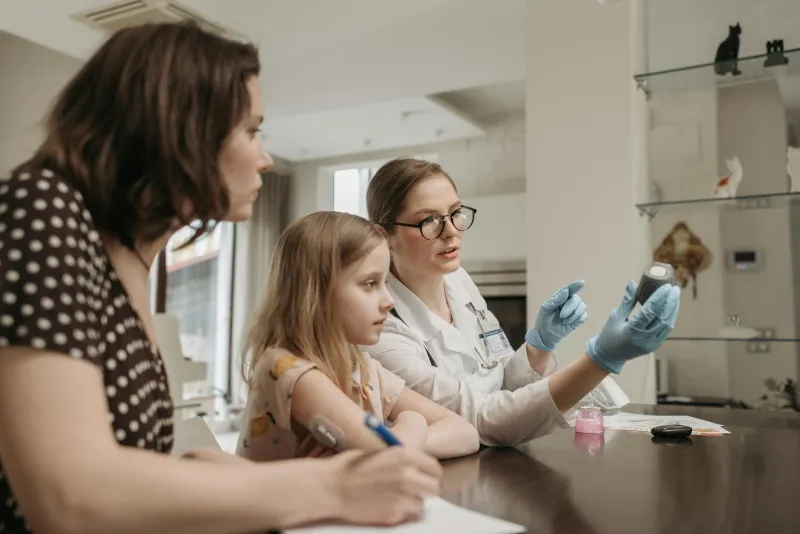
Modern American healthcare operates on radically different principles. The average primary care appointment lasts 12 minutes. Patients often see different providers within the same practice, and electronic health records have replaced personal knowledge. Specialists handle specific body systems, and coordination between providers happens through computer systems rather than hallway conversations.
Dr. Sarah Kim, a contemporary family physician in suburban Chicago, describes the modern reality: "I might see 30 patients in a day. I have access to incredible diagnostic tools and can refer to world-class specialists, but I'm lucky if I remember a patient's spouse's name. The depth of relationship that defined medicine for centuries simply isn't possible in today's system."
Urgent care clinics, emergency rooms, and telemedicine have replaced the house call. Americans can receive medical care 24/7, but rarely from someone who knows their history intimately.
What We Lost and Gained
The old system's advantages were profound. Continuity of care meant better outcomes for chronic conditions. Doctors who knew patients personally could spot subtle changes indicating serious problems. The trust built over decades made difficult conversations about end-of-life care more manageable.
But the limitations were equally significant. Family doctors often lacked training to handle complex conditions. Medical knowledge was limited, diagnostic tools primitive, and treatment options few. A patient with chest pain in 1950 received aspirin and bed rest; today's patient gets an EKG, blood tests, and potentially life-saving cardiac intervention.
The Search for Balance
Some medical practices are attempting to recapture elements of the old model. Concierge medicine offers enhanced access and longer appointments for those who can afford it. Patient-centered medical homes emphasize care coordination and ongoing relationships.
Yet the fundamental tension remains: Americans want both the intimacy of the old family doctor and the technological sophistication of modern medicine. We want someone who knows our story and someone who can access the latest treatments. We want house calls and MRI machines, personal relationships and specialist expertise.
The family doctor who delivered your grandmother, treated your mother's childhood illnesses, and guided your family through medical crises represents something irreplaceable in American life. While we've gained extraordinary medical capabilities, we've lost the profound comfort of having a physician who knew not just our symptoms, but our stories.