When a Toothache Could Kill You: The Brutal Evolution of American Dental Care
When a Toothache Could Kill You: The Brutal Evolution of American Dental Care
Imagine walking into a dentist's office and seeing no diploma on the wall, no sterilized instruments, and no promise of pain relief. Instead, you'd find a man with a pair of crude metal pliers, a bottle of whiskey for "anesthesia," and the grim determination to yank out whatever tooth was causing you agony. This wasn't some medieval torture chamber—this was American dental care as recently as the early 1900s.
For most of human history, a serious toothache was often a death sentence. Americans in the 19th and early 20th centuries lived in constant fear of dental problems, and for good reason. What we consider routine dental work today was once an experience so traumatic that many people chose to live with excruciating pain rather than seek treatment.
The Dark Ages of Dental Pain
Before the 1940s, most American "dentists" were little more than blacksmiths or barbers who happened to own a pair of extraction tools. There were no dental schools, no licensing requirements, and certainly no standardized training. These self-proclaimed tooth pullers set up shop in barbershops, traveling carnivals, or simply went door-to-door offering their services.
The tools of the trade were horrifyingly primitive. Heavy metal forceps, often reused without cleaning, were the primary instrument for extractions. For more complex procedures, practitioners might use a hammer and chisel—literally. Dental drills didn't exist, so cavities were scraped out with sharp metal picks or simply ignored until the entire tooth rotted away.
Pain management was virtually nonexistent. The lucky patients might get a swig of whiskey or a leather strap to bite down on. Most endured the procedure completely conscious, often requiring several strong men to hold them down during extractions. Many people passed out from the sheer agony, which practitioners actually considered helpful for completing the work.
When Teeth Problems Became Life-or-Death
Without antibiotics or proper sterilization, dental infections routinely turned deadly. Abscessed teeth could spread bacteria throughout the body, causing sepsis, heart problems, or brain infections. Historical records show that dental-related deaths were surprisingly common—even affecting prominent Americans like President George Washington, whose dental problems plagued him throughout his life.
Families often watched helplessly as loved ones suffered for weeks or months with infected teeth, knowing that seeking treatment might be just as dangerous as doing nothing. The phrase "grin and bear it" took on literal meaning when it came to dental pain.
Preventive care was unheard of. Most Americans never brushed their teeth regularly, and toothpaste as we know it didn't exist. People might chew on twigs, rub their teeth with salt, or use homemade concoctions of questionable ingredients. Regular dental checkups were a foreign concept—you only visited a tooth puller when the pain became unbearable.
The Revolution Begins
The transformation of American dental care began in the 1840s with the introduction of ether and chloroform as anesthetics. For the first time in human history, dental procedures could be performed on unconscious patients. However, these early anesthetics were dangerous and unpredictable, sometimes killing patients outright.
The establishment of the first dental school—Baltimore College of Dental Surgery—in 1840 marked the beginning of professional standardization. Slowly, dentistry evolved from a trade practiced by anyone brave enough to try it into a legitimate medical profession requiring years of training.
The invention of the dental drill in the 1860s revolutionized treatment options. Instead of extracting every problematic tooth, dentists could now remove decay and preserve the natural tooth structure. This seemingly simple innovation saved millions of Americans from a lifetime of toothless misery.
Modern Miracles We Take for Granted
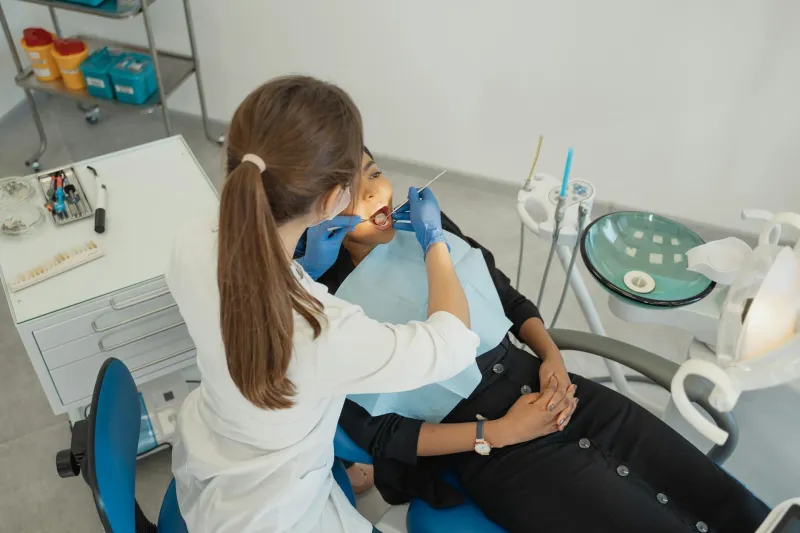
Today's dental experience would seem like science fiction to our ancestors. Local anesthetics like novocaine, introduced in the early 1900s, made dental work virtually painless. Modern patients can undergo complex procedures while reading magazines or watching TV.
Preventive care has transformed oral health entirely. Regular cleanings, fluoride treatments, and early intervention mean that most Americans will never experience the kind of dental emergencies that once terrorized previous generations. We've essentially eliminated many of the conditions that made dental care so brutal in the past.
Cosmetic dentistry has taken things even further. Americans now spend billions of dollars annually on teeth whitening, veneers, and orthodontics—not because they're in pain, but because they want perfect smiles. The contrast couldn't be more stark: we've gone from fearing the loss of our teeth to obsessing over their appearance.
The Staggering Transformation
Perhaps the most remarkable change is how routine dental care has become. Modern Americans visit the dentist twice yearly for cleanings and checkups—an appointment that would have been unthinkable 150 years ago. Children grow up expecting dental care to be painless and preventive, never knowing the terror their ancestors faced.
Advanced techniques like dental implants, root canals, and laser dentistry have made it possible to save teeth that would have been immediately extracted just decades ago. What once required multiple traumatic visits can now often be completed in a single, comfortable appointment.
The next time you casually schedule a dental cleaning or barely flinch during a filling, remember that you're benefiting from one of medicine's most dramatic transformations. In just over a century, American dental care evolved from medieval torture to modern miracle—a change so complete that we can barely imagine how our ancestors survived the alternative.