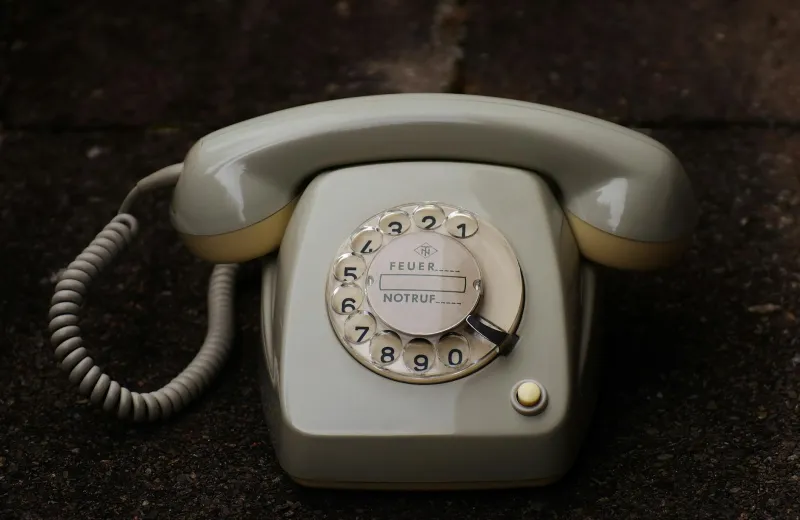
Mary Sullivan learned to cup her hand around the telephone mouthpiece and whisper when discussing anything remotely personal. Growing up in rural Nebraska in the 1940s, her family shared their phone line with eleven other households, and she knew that Mrs. Peterson three farms over had a habit of quietly lifting her receiver to listen in on conversations. Everyone knew, but nobody talked about it directly—it was just part of the strange social contract that governed party line etiquette in small-town America.
For over half a century, this was how most Americans experienced telephone communication: as a semi-public performance where privacy was negotiable and neighbors knew your business whether you wanted them to or not.
The Economics of Shared Voices
Party lines emerged from pure economic necessity. Running individual telephone wires to every rural home and small town would have been prohibitively expensive in the early 20th century. Instead, telephone companies strung single lines that served multiple households, with each family assigned a distinctive ring pattern—two long rings and a short one for the Johnsons, three short rings for the Millers.
By 1940, over 80% of American telephone subscribers shared their lines with neighbors. In rural areas, that figure reached nearly 95%. A typical party line served 8-12 households, though some rural lines connected as many as 20 families to a single wire.
The monthly cost was dramatically lower than private service—often $2-3 per month compared to $8-10 for a private line. For Depression-era families, this wasn't just savings; it was the difference between having telephone service or not.
The Unwritten Rules of Shared Communication
Party line culture developed its own complex etiquette. When you lifted your receiver and heard voices, polite protocol demanded you hang up immediately—though human nature often won out over manners. Emergency calls took absolute priority; anyone tying up the line during a medical crisis faced serious social consequences.
Conversation limits were enforced through community pressure rather than technology. Most party lines operated on an honor system of 3-5 minute calls, with longer conversations earning disapproving comments at the general store or church. Some families developed coded language for sensitive topics, though this often made conversations more intriguing to eavesdroppers rather than less.
"You learned to speak in a kind of shorthand," remembers Dorothy Chen, who grew up on a party line in Iowa. "Instead of saying 'Dr. Williams thinks it might be serious,' you'd say 'the doctor wants to see us again tomorrow.' Everyone understood, but you weren't giving away too much information to whoever might be listening."
The Neighborhood Information Network
What modern Americans might see as a violation of privacy, party line communities often experienced as a form of social connection. Elderly residents could listen in on conversations to feel less isolated. Parents could monitor their teenagers' phone calls without seeming overly intrusive. News spread through party line networks faster than newspapers could print it.
Mrs. Adelaide Morrison, the unofficial operator for a 16-household party line in rural Montana, kept mental track of who was calling whom and often served as an informal message service. "If someone called looking for Jim and he wasn't home, I might mention that I'd heard him talking to the feed store earlier, so he was probably still in town," she explained in a 1963 interview.
This system created accidental communities. People who might never have spoken face-to-face knew intimate details about each other's lives. Shared medical scares, family celebrations, and personal dramas became collective experiences.
The Art of Strategic Eavesdropping
Listening in on party line conversations became a refined skill. Experienced eavesdroppers learned to lift their receivers silently, breathe quietly, and hang up without clicking. Some families kept notebooks tracking neighborhood gossip gleaned from overheard conversations.
But the listened-to developed countermeasures. Families created code words for sensitive topics, held important conversations at neighbors' houses with private lines, or deliberately spread false information to identify and embarrass known eavesdroppers.
"My grandmother would sometimes make up dramatic stories just to see how fast they spread through the party line," recalls Tom Bradley, whose family had party line service in rural Virginia through the 1960s. "She'd mention that someone was supposedly moving to California or getting divorced, then track how long it took for people to ask her about it at church."
The Technology That Changed Everything
Direct distance dialing, introduced in the 1950s, began the party line's decline. Electronic switching systems made individual lines more affordable, and Americans increasingly valued privacy over community connection. By 1960, private line service had become the standard in suburban areas, though rural party lines persisted into the 1980s.
The final blow came from an unexpected source: teenagers. As adolescents claimed telephones for extended social calls, party line systems couldn't handle the demand. Parents facing busy signals when trying to make important calls began demanding private service, regardless of cost.
The Digital Privacy Paradox
Today's communication landscape would seem miraculous to party line veterans. Americans carry devices capable of instant, private communication with anyone on Earth. We can video chat, send encrypted messages, and maintain multiple simultaneous conversations without neighbors overhearing a word.
Yet we've traded the accidental intimacy of party lines for the deliberate exposure of social media. Where party line eavesdropping was covert and sometimes shameful, we now voluntarily broadcast personal information to hundreds of followers. The privacy our grandparents craved has become the connectivity we sometimes flee from.
Modern Americans worry about government surveillance and corporate data collection—legitimate concerns that would have baffled party line users, who accepted that their neighbors knew their business as the price of telephone service.
The Lost Art of Shared Secrets
Dr. Jennifer Walsh, who studies communication history at Northwestern University, argues that party lines created a unique form of community bonding. "Shared secrets, even involuntary ones, create social connections," she explains. "When you knew your neighbor was having marriage problems because you overheard their arguments, you might offer help in indirect ways—bringing over a casserole or offering to watch their children."
This accidental intimacy fostered a different kind of social support system. Medical emergencies, family crises, and personal struggles became community knowledge not through gossip but through overheard conversations, often leading to practical help.
The Modern Echo
Party lines officially disappeared from American telecommunications by the early 1990s, but their cultural impact lingers in unexpected ways. Group chats, conference calls, and social media platforms recreate some aspects of party line communication—shared conversations, community oversight, and the blurred boundaries between private and public communication.
The difference is choice. Where party line users accepted shared communication out of economic necessity, modern Americans choose their level of privacy and exposure. We can mute notifications, block contacts, or go completely offline—luxuries that would have seemed impossible to someone waiting for Mrs. Peterson to hang up so they could call the doctor.
The party line era represents a fascinating chapter in American social history: a time when technology limitations created accidental communities, when privacy was scarce but loneliness was rarer, and when every phone call was a potential neighborhood event. We gained privacy and lost something harder to define—the messy, complicated intimacy of shared secrets and overheard conversations that bound communities together in ways we're still trying to replicate in our hyperconnected, yet often isolated, digital age.