When Flying Cross-Country Was a Three-Day Ordeal Only the Wealthy Could Survive
When Flying Cross-Country Was a Three-Day Ordeal Only the Wealthy Could Survive
These days, complaining about a five-hour flight from New York to Los Angeles is practically a national pastime. The legroom is tight, the Wi-Fi is spotty, and the pretzels are underwhelming. But here's some perspective: less than a century ago, that same journey took three days, involved multiple stopovers, and cost the equivalent of thousands of dollars in today's money. The experience was equal parts glamorous and grueling — and it was absolutely nothing like what we board a plane for today.
The Dawn of Commercial Air Travel
The first transcontinental air mail routes in the United States date back to the early 1920s, but passenger service across the country didn't become a real thing until the late 1920s and into the 1930s. And "service" is a generous word for what early travelers actually experienced.
Transcontinental Air Transport — later part of what would become TWA — launched a coast-to-coast service in 1929 that combined air and rail travel. Passengers would fly during daylight hours, then board a train overnight because flying after dark was considered far too dangerous. The whole trip from New York to Los Angeles took 48 hours under ideal conditions. That was considered revolutionary.
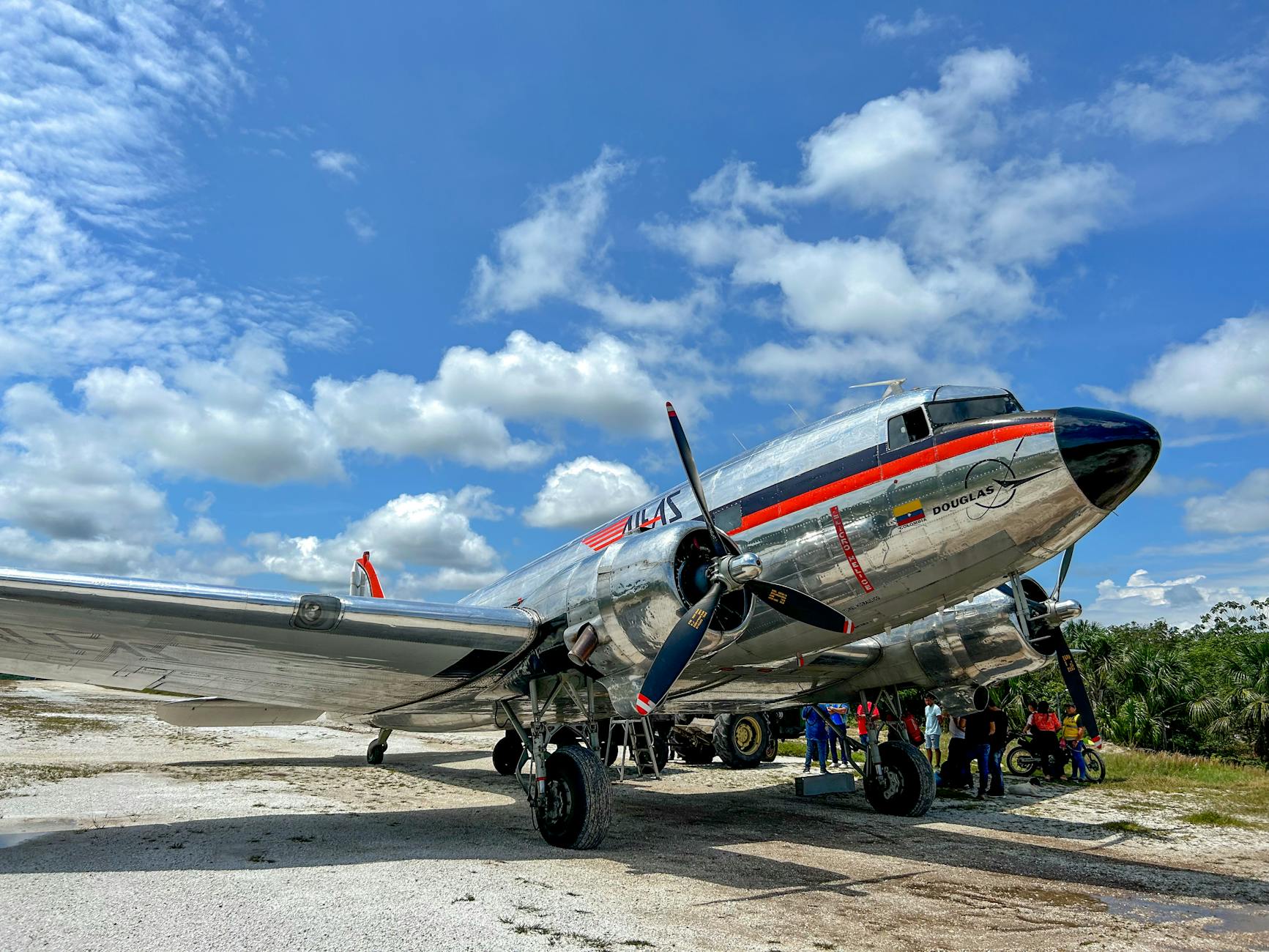
By the mid-1930s, fully airborne transcontinental routes existed, but they still required multiple stops — sometimes as many as 15 or 16 — to refuel. Aircraft like the Ford Trimotor and later the Douglas DC-3 simply didn't have the range to do anything else. A coast-to-coast flight typically took between 15 and 18 hours of actual flying time, spread across two or three days with overnight layovers in cities like Chicago, Kansas City, or Albuquerque.
What the Experience Was Actually Like
If you were one of the rare Americans who could afford to fly in the 1930s or 1940s, the experience had a certain undeniable romance to it — but also a level of physical discomfort that modern travelers would find alarming.
Propeller-driven aircraft flew at lower altitudes than today's jets, which meant passengers were far more exposed to turbulence, temperature swings, and weather systems. Cabins were unpressurized or minimally pressurized, so at cruising altitude, headaches and ear pain were routine. The noise from the engines was relentless. Earplugs weren't standard issue.
And yet, airlines leaned hard into the luxury angle. Passengers on premium services were served multi-course meals on real china. Stewardesses — required in the early days to be registered nurses — attended to every need. Some routes featured reclining sleeper seats. The marketing was aspirational: flying wasn't just transportation, it was an event.
But the price tag reflected that positioning. In 1940, a round-trip transcontinental ticket cost around $150 — roughly $3,200 in today's dollars. For context, the median American household income that year was about $1,900. Flying cross-country wasn't just a splurge. For most people, it was financially impossible.
The Jet Age Changed Everything
The real turning point came in 1958, when Boeing introduced the 707 and commercial jet service began in the United States. Almost overnight, everything changed. Jets cruised at higher altitudes, above most weather. They were faster — dramatically faster. A transcontinental flight that had taken the better part of two days was suddenly a single-day trip, and before long, a five-hour nonstop.
Ticket prices, while still significant, began a long decline. Deregulation of the airline industry in 1978 accelerated that trend, opening the market to competition and driving costs down further. Flying went from being the preserve of business executives and the wealthy elite to something ordinary Americans could realistically consider.
Today, you can book a nonstop flight from JFK to LAX for under $200 on a sale fare. The journey takes around five and a half hours. You'll land the same day you left, probably with time to grab dinner.
The Mundane Miracle We've Stopped Noticing
There's something worth sitting with here. The act of boarding a metal tube in New York and stepping off in California five hours later — having crossed a continent, time zones, and thousands of miles — is objectively extraordinary. We've just stopped treating it that way.
The passengers who took those early transcontinental flights in the 1930s knew they were doing something remarkable. They wrote about it in letters. They saved the ticket stubs. They described the experience of seeing America from the air for the first time as genuinely life-altering.
We now do the same thing while watching a movie and complaining about the seat pocket being too shallow.
That's not a criticism — it's actually a testament to how far things have come. When something that was once the exclusive domain of the privileged and adventurous becomes routine enough to be boring, that's a form of progress worth recognizing. The next time your flight is delayed and you're annoyed about it, maybe spare a thought for the traveler in 1935 who was spending the night in a Kansas City hotel, waiting for dawn so their propeller plane could take off again.
They would have traded places with you in a heartbeat.